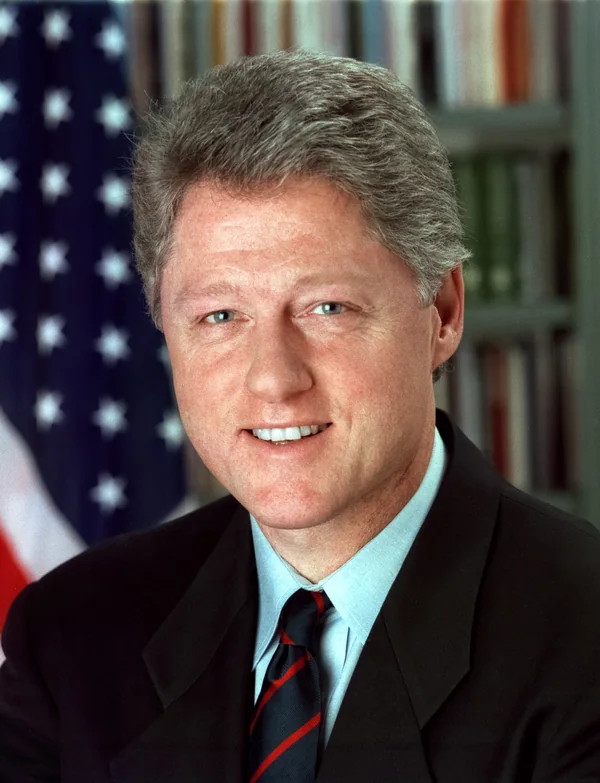
Bill Clinton used executive orders heavily for the machinery of government—regulatory review, procurement, workforce policy and advisory bodies—alongside sanctions and emergency measures responding to conflicts abroad. This profile connects that record to major events without treating timing alone as proof of causation.
Clinton’s cards focus on regulatory review, procurement, facility security, Y2K readiness and sanctions, where an order or official record gives a concrete link to the event described.
Government management and regulation, including EO 12866, which became a durable framework for White House review of significant agency rules.
Trade, procurement and environmental policy, often implementing legislation or international agreements through executive-branch instructions.
Targeted sanctions and emergency authorities concerning Haiti, the Balkans, terrorism and weapons proliferation.
Councils, commissions and interagency structures used to coordinate issues ranging from Y2K readiness to federal-facility security.
Activity across the term
The 1993 and 2001 bars are partial years: Clinton took office on January 20, 1993, and left on January 20, 2001. Counts follow the signer of each order.
Executive orders by calendar year
1993–2001
199357
199454
199540
199649
199738
199838
199935
200041
200112
Major events and executive response
The cards connect the Murrah Building bombing with facility-security reform, the Year 2000 risk with EO 13073, and Kosovo operations with EO 13120.
April 19–October 19, 1995Direct response
Oklahoma City bombing and federal-building security
After the bombing of the Alfred P. Murrah Federal Building, the administration reviewed security at federal facilities. EO 12977 created the Interagency Security Committee to develop and evaluate security standards. The official GSA history expressly links the committee to the bombing.
EO 13073 established the President’s Council on Year 2000 Conversion and required agencies to coordinate preparations for computer systems that might mishandle the year change. Here the public risk named in the order was the subject of the order itself.
East Africa embassy bombings and terrorism sanctions
Two US embassies were bombed on August 7. EO 13099, issued thirteen days later, amended the existing Middle East peace-process sanctions order and expanded its list of blocked terrorist organizations. The timing and policy area are closely connected, but the order legally amended an earlier sanctions program rather than documenting a single-event response.
As NATO operations continued over Kosovo and the Federal Republic of Yugoslavia, EO 13120 authorized the call-up of Selected Reserve and Individual Ready Reserve members. This was an operational response to the conflict rather than a general statement of policy.
EO 12866 outlasted the administration and remained a central reference point for regulatory review under later presidents.
Sanctions orders often formed chains: later presidents amended, expanded or ended emergencies that began during this period.
The archive contains many administrative amendments and continuations as well as headline policy actions; both are essential to understanding presidential use of EOs.
Research boundary
EO 13099 followed the embassy bombings but formally amended an existing sanctions program. The record supports a policy connection, not a claim that the attacks alone caused every designation.
Clinton’s Executive Order 12866 on regulatory planning and review became the central executive-branch process for major rules. It required agencies to plan, assess significant regulatory actions, and coordinate through the Office of Information and Regulatory Affairs (OIRA). It did not make OIRA the author of every rule: agencies kept their statutory responsibilities, while the order created a review process and principles such as weighing benefits and costs. George W. Bush amended this framework through EO 13422; Barack Obama later issued EO 13563, which reaffirmed the earlier order’s core principles and added retrospective review. The continuation matters: later administrations repeatedly changed the process, but the executive-order framework remained a reference point rather than disappearing at the end of Clinton’s term.
Other signature examples show how varied this portfolio was. EO 12977 established the Interagency Security Committee after the Oklahoma City bombing to develop security standards for federal facilities. EO 13073 created a presidential council and required agencies to prepare for the Year 2000 computer transition. EO 13099 expanded the sanctions program targeting groups that threatened the Middle East peace process. And EO 13120 authorized reserve call-ups in connection with the Kosovo conflict. These orders respectively addressed building security, technological readiness, foreign-policy sanctions and military staffing; they should not be read as one general governing program.
The administration also encountered a direct legal limit on using federal purchasing power to shape labor policy. In 1995, EO 12954 sought to bar federal contracts with employers that permanently replaced workers during lawful strikes. In Chamber of Commerce v. Reich, the D.C. Circuit held that the order conflicted with the National Labor Relations Act and reversed the district court. The decision illustrates that procurement authority is not a free-standing power to displace another statute. President George W. Bush later expressly revoked EO 12954 in EO 13204.
Across the rest of the Clinton record, sanctions and emergency declarations often used statutory powers Congress had already supplied, while workforce and regulatory orders managed executive-branch operations. Later presidents kept, amended or replaced those tools depending on their policy goals. For example, the regulatory-review chain from EO 12866 through EOs 13422 and 13563 is a visible case of continuity through revision; the striker-replacement contracting rule is a contrasting case in which a court judgment and a later revocation ended the policy. The Federal Register text of EO 12866 and the cited order pages let readers distinguish a durable administrative process from a policy that was legally displaced.