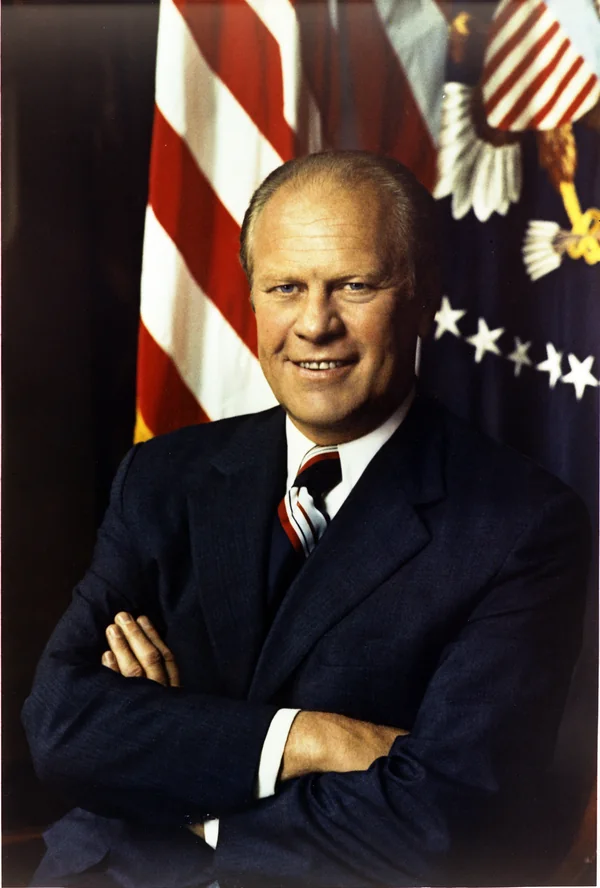
Ford’s executive orders addressed the organization of intelligence, the economic effects of regulation, energy conservation and emergency planning. His intelligence reforms combined instructions for collecting useful foreign information with limits and oversight intended to keep that work within the law. Read the primary record.
Emergency planning was another administrative theme. EO 11921 of June 11, 1976, amended Nixon’s EO 11490 to reflect organizational and functional changes. It replaced references to the former Office of Emergency Preparedness with the Federal Preparedness Agency in General Services, and incorporated assignments for bodies including the Environmental Protection Agency and National Credit Union Administration. The document concerned preparation and coordination under existing authorities. Its detailed revisions should not be confused with evidence that every emergency power described in the planning framework was immediately exercised against the public. Primary source.
Intelligence investigations and restrictions
The resulting Rockefeller Commission report is preserved by the Ford Presidential Library. Its contents address mail interception, Operation CHAOS, investigations by the CIA Office of Security, relationships with other agencies and files concerning American citizens. That scope explains the domestic dimension of Ford’s intelligence agenda: the issue was not simply whether the United States needed intelligence abroad, but how secrecy and national-security responsibilities could coexist with restrictions on domestic activity. The completed report remains evidence of the inquiry; the original commission should not be treated as an oversight body that continues to operate. Primary source.
Military policy and women’s participation
EO 11832 of January 9, 1975, established a national commission for International Women’s Year. Ford directed it to promote equality and women’s full participation in economic, social, cultural and political life. The commission could consult organizations, publish information and encourage public and private objectives; executive agencies also had designated participants in an interdepartmental task force. This was an executive order creating practical coordination machinery. The proclamation announcing observance of the year, referenced in its preamble, was a separate presidential document and should not be added to the executive-order count. Primary source.
Activity across the term
Gerald R. Ford’s dated executive-order records are grouped by signing calendar year. Transition years include only this president’s orders.
EO 11821, signed November 27, 1974, required major legislative proposals, regulations and rules from the executive branch to include certification that their inflationary consequences had been considered. Ford linked the requirement to his October address to Congress. The Office of Management and Budget was to establish criteria covering costs, productivity, competition and the availability of important goods and services. This was a method of checking government decisions before they were made, not an order imposing a new general system of price controls. Its language shows how concern about inflation could become an administrative review process. Primary source.
Implementing the Energy Policy and Conservation Act
EO 11912, issued April 13, 1976, translated the Energy Policy and Conservation Act into assignments for particular officials. It covered conservation in federal buildings, procurement standards and preparation of conservation and rationing contingency plans. The Federal Energy Administration coordinated a ten-year government-building plan, while other functions went to General Services, Commerce and State. Ford thereby used an order to make legislation operational across departments. The requirement for consultation mattered: energy supply, trade, federal property and purchasing involved different agencies, and the order allocated responsibilities without pretending those subjects belonged to a single office. Primary source.
Investigating CIA activities inside the United States
EO 11828 created a commission on January 4, 1975, to investigate CIA activities inside the United States that raised questions about compliance with the agency’s statutory limits. Its duties included assessing safeguards and recommending changes to the president and CIA director. Agencies were instructed to supply assistance within the law, and potentially criminal evidence was to go to the attorney general. The commission was a fact-finding body rather than a court. The order also provided a termination mechanism tied to delivery of its report, distinguishing this temporary inquiry from a permanent intelligence organization. Primary source.
EO 11905, signed February 18, 1976, established a broader framework for foreign intelligence. It assigned responsibilities, organized review of sensitive activities and created an Intelligence Oversight Board. Its restrictions addressed collection concerning Americans and prohibited government employees from engaging in or conspiring to engage in political assassination. The order’s significance was therefore both managerial and limiting: intelligence quality, budgets and lines of command were addressed alongside compliance with law. It did not abolish intelligence agencies or convert their operations into an unrestricted presidential power. Primary source.
Military policy and women’s participation
EO 11850 of April 8, 1975, renounced first use of chemical herbicides in war, subject to an exception for vegetation control at US bases and their immediate defensive perimeters. It also renounced first use of riot-control agents in war except specified defensive military circumstances intended to save lives. The defense secretary was to ensure the policy was followed, and use required advance presidential approval. These qualifications are essential to an accurate account: the order stated a national policy with carefully defined exceptions, rather than an unconditional prohibition on every domestic or military use of either category. Primary source.
Courts and what later presidents changed
In Independent Meat Packers Association v. Butz (1975), the Eighth Circuit considered an attack on USDA beef-grading regulations that included alleged noncompliance with EO 11821. It concluded that Ford’s inflation-review order was primarily a managerial instrument for his economic policies and did not create a private right of action. The court therefore rejected the use of an allegedly deficient inflation statement as a basis for setting aside all the regulations. The ruling illustrates the difference between an instruction binding executive management and a right that a private litigant can enforce in court. Court opinion.
Carter replaced Ford’s intelligence framework with EO 12036 in January 1978, explaining that the new order built on experience under EO 11905 and sought lawful intelligence operations. The National Archives records EO 11905 as superseded; Reagan later revoked Carter’s framework through EO 12333, as the National Archives disposition record shows. Ford’s women’s commission also had a successor rather than permanent institutional life: Carter’s EO 12050 revoked EO 11832 as amended and created a National Advisory Committee for Women, whose work included reviewing recommendations from the 1977 National Women’s Conference. Carter’s replacement order confirms the revocation. Primary source.
Explore the curated collection
Ford’s historic-order guides are a curated selection, not the full 169-order record. Use them for detailed evidence on the CIA commission and intelligence framework, and compare the original instructions with the amendments and successor orders.