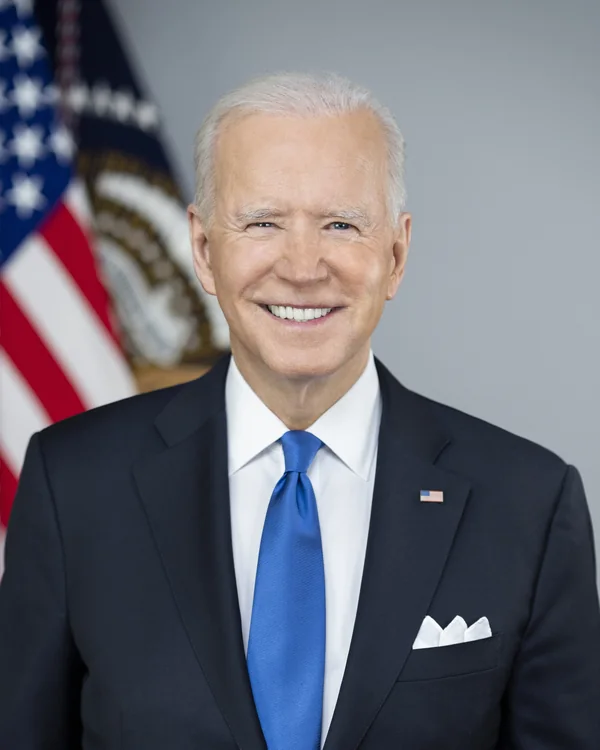
EO-centered presidential profile

Joe Biden

Joe Biden opened with a large group of orders reversing or revising predecessor policy and organizing the COVID-19 response. Later orders addressed cybersecurity, Russia’s full-scale invasion of Ukraine, reproductive healthcare after Dobbs, climate and the rapid development of artificial intelligence.

46th presidentJanuary 20, 2021–January 20, 2025
162 ordersIndexed in this site
EO 13985–14146Numbered EO range

How this president used executive orders

Biden’s cards cover pandemic coordination, federal cybersecurity, Russia-related sanctions, post-Dobbs reproductive-health measures and artificial intelligence, each with a distinct order-based connection.

  • Pandemic coordination, public-health infrastructure and equity in the distribution of federal resources.
  • Reversal or revision of prior immigration, climate, regulatory and workforce instructions.
  • Sanctions and emergency authorities responding to Russia’s aggression against Ukraine.
  • Government-wide standards for cybersecurity, artificial intelligence, competition and climate-related procurement.

Activity across the term

The 2021 and 2025 bars are partial terms. The archive groups orders by signer, so documents signed before and after the January 2025 inauguration belong to different administrations.

Executive orders by calendar year

2021–2025

  • 202177
  • 202229
  • 202324
  • 202419
  • 202513

Major events and executive response

The examples identify the stated links to the pandemic, cyber incidents, Russia’s invasion of Ukraine, Dobbs and AI development; they do not replace a full account of other government action.

January 20, 2021 onwardDirect response

COVID-19 pandemic and vaccine rollout

EO 13987 organized a unified federal response. EOs 13995 and 13996 focused on equitable response, testing and the public-health workforce. These orders coordinated federal machinery during an existing emergency rather than replacing public-health law or congressional funding.

Evidence: EO 13987 official text

2020–May 12, 2021Direct response

SolarWinds intrusion and major cyber incidents

EO 14028 set government-wide requirements for modernizing federal cybersecurity, software-supply-chain security and incident information sharing. The White House cyber office later explicitly described it as following the SolarWinds attack; the Colonial Pipeline incident added urgency to the same policy environment.

Evidence: Official cyber office report

February 24–March 2022Direct response

Russia’s full-scale invasion of Ukraine

EO 14065 blocked new investment and certain trade involving the separatist regions immediately before the wider invasion. EOs 14066 and 14068 then prohibited specified Russian energy imports, goods and new investment as the war escalated.

Evidence: EO 14066 official text

June 24–July 8, 2022Direct response

Dobbs decision ends the federal constitutional right to abortion

EO 14076 directed measures concerning reproductive healthcare access, privacy, safety and information after the Supreme Court’s Dobbs decision. The order could direct federal agencies, but could not itself restore the constitutional rule overturned by the Court.

Evidence: Official impact statement

2022–October 30, 2023Contextual connection

Rapid adoption of generative AI

EO 14110 created a government-wide program for AI safety testing, standards, privacy, civil rights, labor and federal use. It responded to rapid technological development and public concern rather than to one discrete news event, so the connection is contextual.

Evidence: Official order

Continuity and limits

  • Many first-week orders changed Trump-era policy, illustrating that executive orders can be reversed more readily than statutes.
  • Major programs still depended on legislation, appropriations and agency rulemaking; the EO usually coordinated or directed the executive branch.
  • Some Biden orders were later revoked or redirected after the 2025 transition, so each detail page should distinguish original purpose from current status.
Research boundary

EO 14076 directed federal steps but could not reverse Dobbs. EO 14110’s agency deadlines required later implementation, so the orders had different legal and operational limits.

← All presidents

Implementation, litigation and what the next administration changed

Biden’s early orders tried to coordinate the federal response to the COVID-19 pandemic, set government-wide management policies and reverse selected Trump actions. EO 13987 organized federal coordination; EO 13991 established the Safer Federal Workforce Task Force; EO 14028 directed federal cybersecurity improvements. Later actions broadened climate and industrial policy, while EO 14110 assigned safety, security, privacy and reporting work across agencies. These texts mostly set agency tasks and deadlines; the operational detail depended on guidance, regulations, budgets and statutory authorities issued afterward.

The court record around COVID-era directives illustrates those dependencies. EO 14042 instructed agencies to insert safety requirements into many federal contracts and tasked the Safer Federal Workforce Task Force with guidance. The District Court for the Southern District of Georgia enjoined enforcement nationwide, and the Eleventh Circuit affirmed the preliminary injunction, concluding that the Procurement Act likely did not authorize a government-wide vaccination mandate. The appellate opinion describes the order’s contract clauses, Task Force guidance and OMB determination in detail; see Georgia v. President of the United States. The litigation addressed the contractor mandate’s authority, not every safety policy in every federal workplace.

Another dispute arose from EO 14026, which raised the minimum wage for many workers on federal contracts. Courts considered whether the President could use federal procurement powers for that purpose and how the order interacted with the existing contractor-wage system. The Department of Labor’s later guidance records that Trump’s EO 14236 revoked Biden’s EO 14026 in March 2025. The official record is useful because the policy sequence includes the presidential directive, DOL’s implementation rules and subsequent litigation—not only the original signing announcement.

Successor orders changed many Biden policies expressly. Trump’s EO 14148 revoked numerous Biden directives, including EO 13985 on racial equity and EO 13990 on climate and regulatory science. A separate order, EO 14179, revoked EO 14110 on AI and required officials to review policies based on it. These are concrete reversals in executive-branch direction. They do not, by themselves, repeal statutes, reverse final court judgments, or erase completed agency actions; later agencies must still act within the law and the text’s transition terms.

Some policy areas show continuity despite formal changes. Federal cybersecurity standards, for example, remained an active management concern across administrations even as agencies received new tasks and priorities. The right comparison is therefore not simply “kept” or “reversed”: identify the exact order, the later order that amended or revoked it, the agency rule or guidance built under it, and any court ruling that limited implementation. The order pages link those stages so readers can see which part of a policy endured and which part changed.