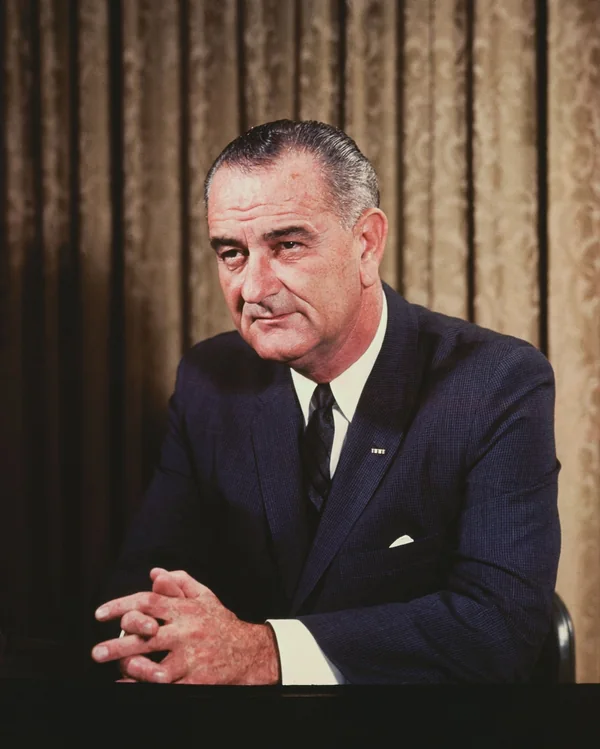
Johnson used executive orders to extend employment equality, investigate national crises and organize federal responsibilities during the Vietnam War. His directives combined enduring contractor requirements with commissions whose work ended after a report.
The commission could request information and assistance from executive agencies; the FBI was specifically directed to provide investigative assistance. EO 11365 required reporting and termination after the final recommendations. The National Archives records that the commission terminated when it submitted its final report on March 1, 1968. Its completion was consequently an intended feature of the investigatory model. A commission’s report could continue to influence debate after the body ended, but the order did not create an indefinitely operating civil-disorders agency. Primary source.
Revision, continuity and revocation
Trump’s EO 14173 expressly revoked EO 11246 on January 21, 2025, and allowed contractors to continue complying with the previous regulatory scheme for 90 days. The revocation ended the executive-order framework rather than repealing all statutory prohibitions on employment discrimination. For Johnson’s profile, the important distinction is between his original directive, the amendments made by successors and the later order terminating it. Historical significance does not by itself establish a rule’s present legal force. Primary source.
Read the selected historic guides
The historic collection contains a curated selection of Johnson’s orders, including four detailed guides. It does not reproduce all 325 directives. Use the individual guides alongside the presidential counts table to distinguish collection coverage from the full record.
Activity across the term
Lyndon B. Johnson’s dated executive-order records are grouped by signing calendar year. Transition years include only this president’s orders.
The Kennedy assassination and the Warren Commission
EO 11130 appointed the commission investigating President Kennedy’s assassination and the subsequent killing of the accused man. Issued November 29, 1963, it placed the chief justice at the head of a membership that included legislators and other public figures. The commission could examine federal investigative evidence, pursue further inquiry, establish procedures and employ assistants. Executive departments were directed to provide assistance. The resulting 1964 report is preserved by the National Archives. The order supplied an investigatory mandate, rather than an executive verdict resolving criminal liability. Primary source.
EO 11365 established the National Advisory Commission on Civil Disorders on July 29, 1967. Chaired by Otto Kerner, it was tasked with examining the origins and basic causes of recent major urban disorders. Its remit also included prevention, communication between local authorities and community groups, training, coordination and the roles of federal, state and local government. The directive therefore required analysis of underlying conditions as well as techniques for responding to violence, rather than limiting the inquiry to individual incidents. Primary source.
The Vietnam War also appears through administrative measures. EO 11216 designated Vietnam and specified adjacent waters as a combat zone for purposes of section 112 of the Internal Revenue Code. It identified January 1, 1964, as the beginning of combatant activities for that tax designation. This was a directive about the treatment of service in a defined area under a statute. It should not be mistaken for a declaration of war or for the document authorizing every subsequent military operation. Primary source.
Johnson’s numbered range contains 324 ordinary integer positions, but the presidential total is 325. The National Archives also lists EO 11359A, which added the transportation secretary to the President’s Council on Recreation and Natural Beauty. Including that letter-designated directive reconciles the total with the range shown in the comparison table. Counts do not measure how far an order changed policy: an amendment to a council’s membership and a major employment directive each contribute one document to the presidential record. Primary source.
Civil rights policy was a central use of the instrument. EO 11375 connected Johnson’s executive employment rules to the national equal-opportunity policy expressed in Title VII of the Civil Rights Act of 1964. It expanded the earlier order’s categories by addressing sex discrimination. The order covered federal employment and federal contractor employment through different provisions and effective dates. That structure shows how administrative action supplemented legislation while retaining its own defined institutional reach. Primary source.
Signature orders and their practical machinery
EO 11246 consolidated equal-employment rules on September 24, 1965. Its contractor provisions required nondiscrimination and affirmative action, compliance reports and access to relevant records. Contract clauses extended obligations to covered subcontractors. The secretary of labor administered the contractor and federally assisted construction portions, with sanctions available for noncompliance. Those details explain why the order mattered beyond its statement of principle: federal purchasing and construction assistance became mechanisms for requiring employers to implement and document employment commitments. Primary source.
EO 11375 expressly added sex to the protected grounds in October 1967. Its federal employment changes took effect after 30 days, whereas the amendments to contractor provisions took effect one year after the order. It also revised complaint procedures and language concerning organizations referring workers or providing training. Those distinctions matter: saying that Johnson added sex discrimination protection immediately and identically to every part of the system would miss the implementation schedule written into the directive. Primary source.
Court cases and the limits of the contractor system
In Contractors Association of Eastern Pennsylvania v. Secretary of Labor, the Third Circuit upheld the Philadelphia Plan under the affirmative-action mandate of EO 11246. The decision came in 1971, under Nixon, and concerned Labor Department implementation of Johnson’s order in federally assisted construction. It treated the employment covenant as a condition on the use of federal funds. This was a judicial test of the order’s operating framework after Johnson’s presidency, not a judgment that every possible affirmative-action policy was lawful. Court opinion.
A different boundary emerged in Chrysler Corp. v. Brown in 1979. The Supreme Court considered disclosure of confidential contractor information collected through the employment-compliance system. It held that the disclosure regulations lacked the necessary legal basis and procedural footing to supply authorization under the Trade Secrets Act, and remanded. The Court did not strike down EO 11246 itself. The case demonstrates that authority to collect employment information does not automatically provide authority to disclose it publicly in disregard of another statute. Supreme Court opinion.
Revision, continuity and revocation
Nixon’s EO 11478 superseded the federal employment part of EO 11246 in 1969, leaving contractor policy on its separate track. Carter’s EO 12086 later amended the contractor framework and assigned revised enforcement responsibilities. These successive changes illustrate how the employee and contractor portions developed differently; the legal history cannot be reduced to a single unchanged Johnson policy operating identically for decades. Primary source.