Executive Order 14203: Imposing Sanctions on the International Criminal Court
President: Donald J. Trump
Declared a national emergency concerning specified ICC actions and authorized property blocking and entry restrictions against designated foreign persons.
Status: In effect.
Is Executive Order 14203 still in effect? Yes. Active sanctions program; designations continue.
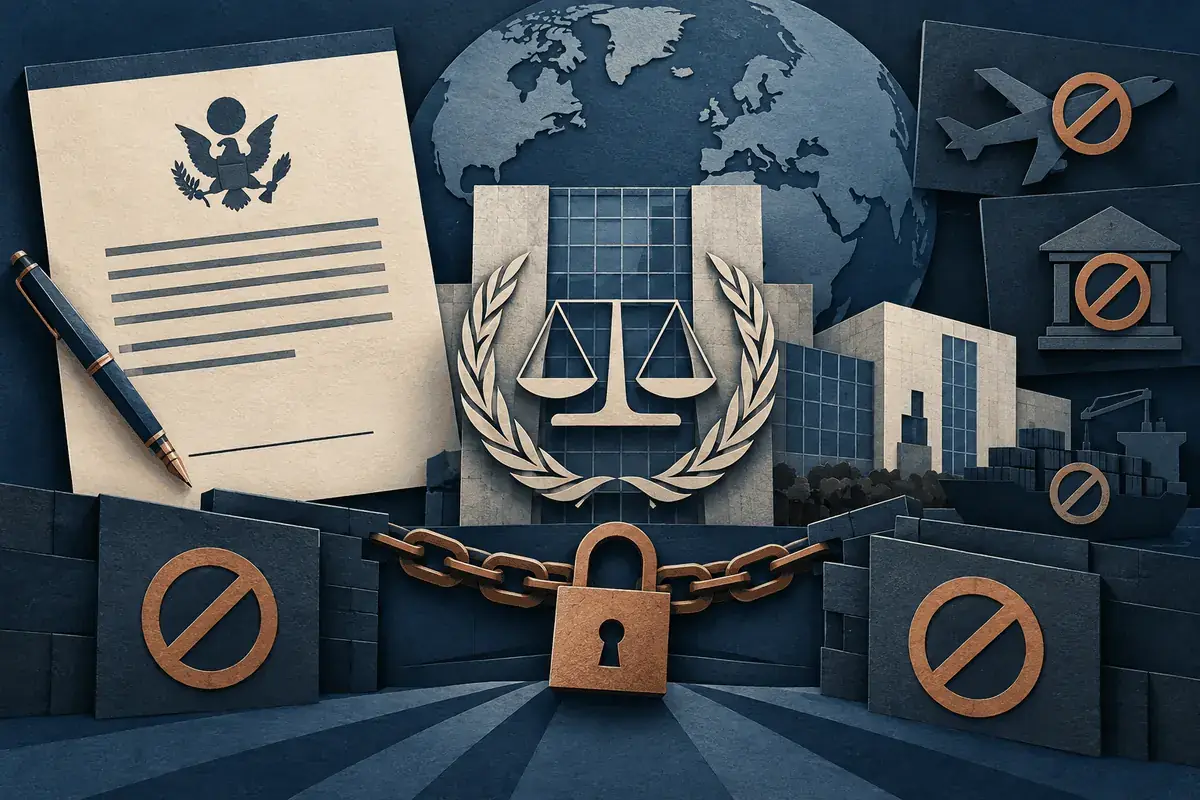
What does Executive Order 14203 do?
The order created designation criteria rather than automatically sanctioning everyone associated with the ICC. Treasury implemented it through 31 CFR part 528, designations and general licenses. OFAC’s current program page records designations and licensing activity continuing through August 2026.
Reading the operative provisions of Executive Order 14203
EO 14203 establishes criteria for sanctions against people the administration determines are involved in specified ICC actions against the United States or its allies. It does not automatically sanction every ICC employee, judge, witness, or member state. Treasury, in consultation with State, must make the individual designation; OFAC then administers blocking rules, licenses, and compliance instructions. State and Homeland Security separately handle entry restrictions where applicable.
Once a person is designated, U.S.-jurisdiction property may be blocked and U.S. persons generally may be prohibited from transactions, subject to any general or specific license. Those are significant consequences, so the designation notice and OFAC regulations matter. A sanctions order is not a criminal conviction, and the criteria do not themselves determine whether the ICC has jurisdiction in a particular case.
OFAC’s current program page records continuing designation and licensing activity. The page’s listed dates help distinguish the President’s initial policy from Treasury’s later actions. A license can authorize conduct that would otherwise be prohibited, while a court may separately consider constitutional or statutory challenges. Use the designation notice and current license terms when checking whether a transaction is permitted. Read Executive Order 14203 in the Federal Register.
The order’s criteria are connected to the administration’s foreign-policy position on the Court’s jurisdiction, but a designation under this EO is a U.S. sanctions decision. It does not alter the Rome Statute or direct the ICC to change its cases. A designation notice should identify the person and the factual basis; a license may authorize specific transactions, and OFAC’s FAQs explain compliance. U.S. persons should check the current notice and license before assuming a payment, legal service, or other activity is allowed.
Before and after
Before the order
Earlier ICC sanctions imposed in 2020 had been revoked in 2021.
US persons remained subject to other statutes governing support for the ICC and protected activities.
After the order
Treasury established a new ICC-related sanctions program, added designated persons to the SDN List and issued general licenses for authorized activity and wind-downs.
The program remained active in September 2026.
Who had to do what
| Agency / office | Action | Timing / position |
|---|---|---|
| Treasury Secretary with State | Designate persons meeting order criteria and block property | Ongoing |
| State and Homeland Security | Implement entry restrictions | As applicable |
| Treasury / OFAC | Issue regulations, licenses and compliance guidance | Ongoing |
What happened next
EO 14203 signed.
OFAC recorded further designation activity.
OFAC continued to list the program as active.
Court status
See the court documents in Sources by type.
Legal and source detail
How it works legally
IEEPA authorizes blocking and transaction restrictions during a declared national emergency, subject to statutory exceptions including certain communications and information. Designated persons may use OFAC administrative processes and judicial review.
Sources by type
If a source is unavailable, first check the cited publisher or another official repository. The cited publisher remains the authority.
Primary and official sources
Orders, laws, court records and official implementation material.
How we checked this
Last checked against the sources above on September 9, 2026. How we research →