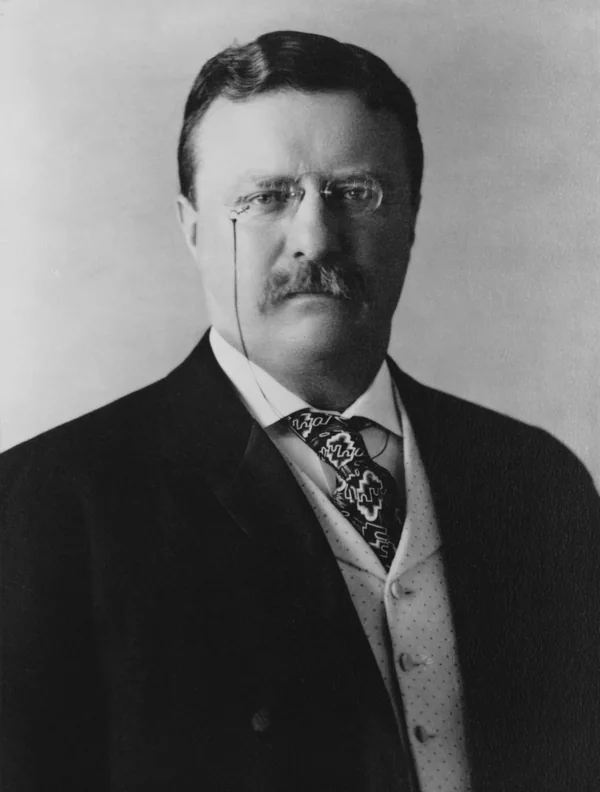
How this president used executive orders
Conservation through specific reservations
The wider conservation context included several legal instruments. The Theodore Roosevelt Presidential Library describes forests, parks, monuments and bird reserves as parts of his legacy. The distinction matters: Roosevelt’s Proclamation 679 established the Independence Forest Reserve under a statute expressly requiring a public proclamation. It belongs in the conservation story, but it should not be added to an executive-order list merely because it reserved land. Presidential library conservation overview; Independence Forest Reserve proclamation.
Federal workers and control over legislative requests
Roosevelt’s successors did not leave the relationship between departments and Congress untouched. Taft’s EO 1142, issued November 26, 1909, required covered subordinate officials and military officers stationed in Washington to seek congressional action with their department head’s consent and knowledge. It also controlled responses to congressional information requests. The later order shows continuity in executive supervision of official communication, while its specific language and scope must be read separately from Roosevelt’s restriction on employees’ own interests. Taft’s EO 1142.
Diplomacy, maritime administration and personnel
An October 1, 1901 order authorized Thaddeus S. Sharretts to negotiate a plan for converting Chinese import duties into specific duties under the Peking protocol. The resulting plan still required presidential approval. This shows an executive order used to designate a representative and define negotiating authority, rather than to impose a domestic regulatory program. It also supplies a reminder that an order could implement an international arrangement without itself being a treaty. Sharretts negotiating authorization.
Judicial context and later limits
United States v. Midwest Oil Co., decided in 1915, addressed Taft’s 1909 petroleum withdrawal, not Roosevelt’s Pelican Island order. The Supreme Court relied on a longstanding history of executive land withdrawals and congressional acquiescence in sustaining that action. It is relevant to the legal setting of Roosevelt’s land-management practice, but it is not a judgment directly upholding every Roosevelt reservation. The dissent disputed the inference of presidential authority, illustrating that historical practice could remain constitutionally contested. Midwest Oil opinion.
Major events and executive response
Same policy responsePelican Island and the first wildlife refuge
The Pelican Island guide covers the unnumbered March 14, 1903 order reserving the Florida island for native birds. George W. Bush’s centennial statement identifies that executive order as the origin of America’s first wildlife refuge and describes the National Wildlife Refuge System that grew from it. Pelican Island is an example of a small, defined reservation with a much longer institutional legacy, rather than a single order creating the entire later refuge system. Presidential statement on the refuge centennial.
Same policy responseExperimental tree planting on reserved public land
Roosevelt’s conservation instructions were not limited to wildlife. An August 9, 1902 order set aside specified public lands in Nebraska for the Department of Agriculture’s experimental tree planting. The geographic description was the operative part of the directive: officials had to know exactly which land was reserved and for which use. This example connects scientific experimentation with land administration without treating every Roosevelt reservation as a national park or every conservation document as an executive order. Experimental tree-planting order.
Same policy responseRestrictions on federal employees’ appeals to Congress
In the January 31, 1902 order covered by the EO 163 guide, Roosevelt barred executive-department officers and employees from directly or indirectly seeking pay increases or legislation in their own interest except through department heads. The restriction covered organized employee associations as well as individuals and carried dismissal as its penalty. This was presidential control over the workforce’s access to legislative channels, not a regulation of every citizen’s ability to petition Congress. Original employee restriction.
Conservation through specific reservations
Another land order, dated December 19, 1906, reserved specified New Mexico land for the use and benefit of the Jemez Pueblo. It excluded land already outside federal ownership or subject to valid legal rights. That qualification shows how presidential instructions worked within existing interests in public land. The purpose here was a reservation for a named Indigenous community, distinct from bird protection or an agricultural experiment, even though all three used the technique of identifying and setting aside land. Jemez Pueblo reservation order.
Diplomacy, maritime administration and personnel
Two short reservations illustrate maritime administration. The November 15, 1901 order reserved California’s San Nicolas Island for lighthouse purposes. The October 30, 1901 order reserved Harbor Island and nearby islets in Sitka Harbor for the Revenue Cutter Service, subject to existing legal rights. Neither text established a broad conservation policy: each assigned particular land to a particular federal use. Lighthouse reservation; Revenue Cutter Service reservation.
Judicial context and later limits
Federal employees’ position also developed through legislation and litigation after Roosevelt. In Arnett v. Kennedy, the Court described the Lloyd–La Follette Act as protecting communication with Congress and membership in employee organizations, alongside standards and procedures for removal. That 1974 case concerned a later employee’s dismissal, not a direct challenge to EO 163 or EO 402. Its historical discussion shows why the early restriction should not be presented as the rule governing modern federal employees. Arnett opinion and statutory history.
What endured
Pelican Island’s importance outlasted Roosevelt’s administration. Clinton’s 1999 Lands Legacy remarks named its habitat among proposed conservation acquisitions, and Bush’s 2003 statement celebrated its place in the refuge system. Those successor statements document continued presidential commitment to the conservation legacy; they do not establish that the wording of the original order remained the sole source of modern management authority. Clinton’s Lands Legacy remarks; Bush’s centennial statement.
EO Explained’s historic-order collection selects a small number of Roosevelt directives for detailed guides. It is a curated selection, not his complete 1,081-order record. The reservation, employee and diplomatic examples above show why readers should compare subjects and legal mechanisms before drawing conclusions from the total.