Executive Order (unnumbered): Reserving Pelican Island for Native Birds
President: Theodore Roosevelt · Energy, environment and natural resources
An unnumbered Roosevelt order reserved Pelican Island in Florida as a breeding ground for native birds. It became the first federal bird reservation and the starting point of the National Wildlife Refuge System.
Research depth: Expanded historical analysis. About this collection
Status: In effect. Sources: U.S. Fish and Wildlife Service Pelican Island Refuge history and current protection · U.S. Fish and Wildlife Service current refuge page.
Is the March 14, 1903 Pelican Island executive order still in effect? Yes. The U.S. Fish and Wildlife Service continues to protect and manage Pelican Island National Wildlife Refuge, which it traces to the March 14, 1903 reservation. Congress added wilderness protection in 1970; the original designation has not been shown to have been revoked.
- Signed
- March 14, 1903
- President
- Theodore Roosevelt
- Current position
- Refuge continues under later conservation law and administration
This 1903 executive order was unnumbered; the identifier in its web address uses its signing date.
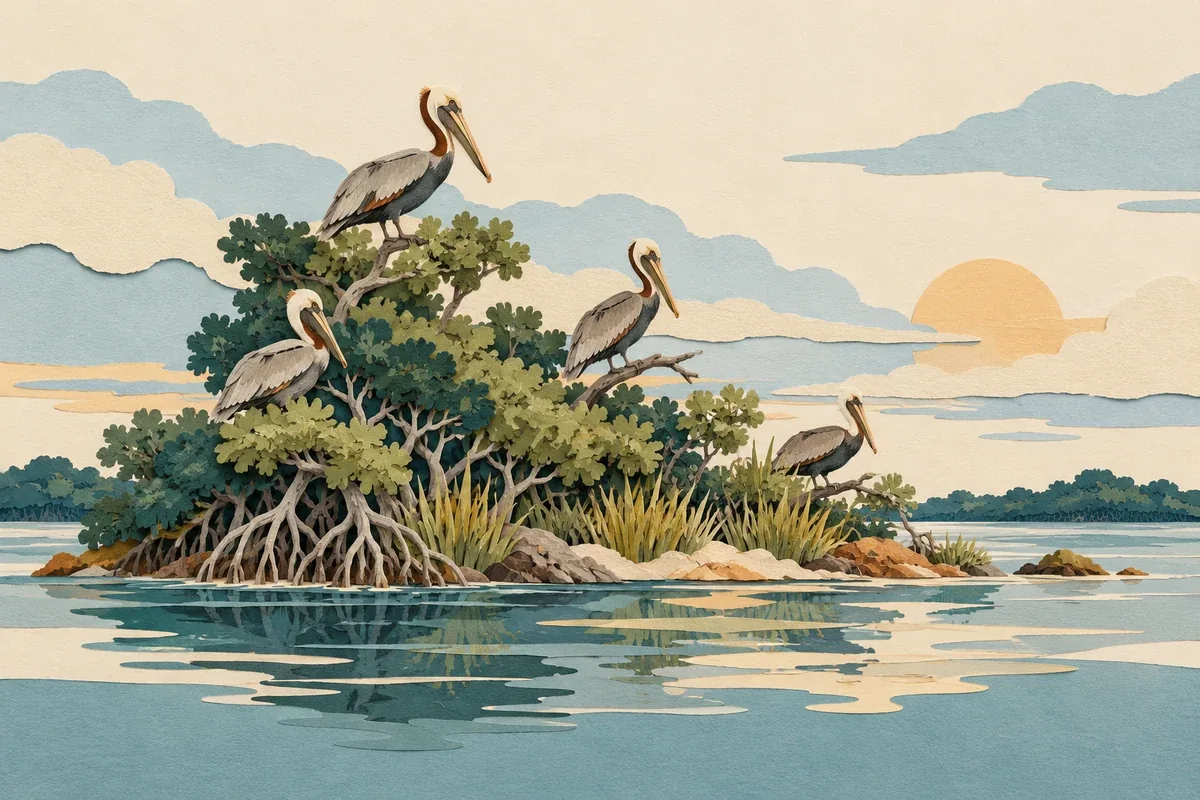
What the order directed
The short reservation set aside the island for native birds, responding to threats to nesting birds. It was an executive reservation of federal land, not a proclamation or a modern system-wide refuge statute. “Reserving Pelican Island for Native Birds” is a descriptive guide title.
Why it was signed
Roosevelt set aside Pelican Island in Florida on March 14, 1903 as a preserve and breeding ground for native birds. It was an unnumbered executive order; the date-derived identifier on this website is only a way to locate its guide. The Fish and Wildlife Service identifies it as the beginning of the national wildlife refuge system. FWS refuge history; FWS policy history.
Before federal protection, nesting birds faced hunting for feathers and other pressures. The refuge’s official conservation plan records Paul Kroegel’s work protecting the rookery and the role of conservation advocates in securing federal action. This local history explains why a small island, rather than a nation-wide habitat order, became the first reservation. FWS conservation plan.
The original reserved roughly 5.5 acres, according to the Service’s plan. The term “first refuge” describes the start of a later system, not a claim that the 1903 order established every modern refuge or created the Fish and Wildlife Service under its present name. The present system has legislation and administrative arrangements enacted much later. Plan’s purpose section.
What the text authorized
The short presidential action reserved Pelican Island for native birds. Its operative purpose was a place-specific bird preserve and breeding ground. It did not set national rules for every wildlife habitat, dictate a nationwide hunting season or establish an automatic refuge for every island. The location and the scope of the reservation are essential to an accurate summary. FWS plan recording original purpose.
Unlike the numbered 1909 EO 1014, the 1903 founding order has no assigned executive-order number. A generic “EO 1903” label could lead readers to a different numbered instrument. This guide therefore displays “unnumbered” and cites the Service’s archival account of the original reservation. FWS plan.
The original order did not contain the modern compatibility review and comprehensive planning requirements now used by the Service. Those arose under later laws and refuge-system policy. Its historic conservation purpose remains relevant, but modern management has an expanded legal framework. Refuge plan and statutory purposes.
It is important to separate signing from later enlargement. Roosevelt’s founding action occurred March 14, 1903; EO 1014 expanded the reservation on January 26, 1909. The site’s original record is about the first act and treats the second as a later related instrument, rather than combining them into an invented single signature. FWS administrative plan.
What happened in practice
The Service documents the 1909 enlargement by EO 1014. A later boundary extension is concrete implementation evidence: the federal protected area was not limited forever to the acreage of the original rookery island. The 2006 refuge plan describes a substantially larger refuge, though its acreage is a dated planning figure rather than a guarantee of today’s exact area. FWS plan.
The plan identifies additional statutory purposes, including the National Wildlife Refuge System Administration Act, Endangered Species Act and Fish and Wildlife Coordination Act. Those laws help explain current management and cannot be retroactively attributed to Roosevelt’s brief 1903 text. The original purpose remains one layer in that longer legal history. FWS refuge purposes.
The same official plan addresses habitat, threatened and endangered species, visitor use and compatibility determinations. Those administrative actions show a functioning refuge rather than merely an unimplemented historical designation. They also show why its management cannot be inferred solely from one sentence signed in 1903. Conservation plan.
As of 2026, the Service continues to present Pelican Island as an operating national wildlife refuge and reports habitat restoration, bird surveys and mosquito-control work. These are current agency descriptions, not measurements of conservation success for the entire 123-year period. Present refuge page; 2026 FWS account.
The Service’s 2006 comprehensive conservation plan expressly lists the 1909 executive enlargement and the statutes supporting the refuge. Its management chapters address habitat restoration and visitor use through compatibility determinations. That dated plan is strong evidence of agency implementation, but the planning acreage and individual habitat conditions should not be presented as September 2026 measurements without a newer official inventory. FWS conservation plan.
Reaction and legacy
The original site-specific reservation survives as a historic founding authority, but subsequent boundary changes and statutory management make “unchanged since 1903” inaccurate. The refuge continues; an unnumbered order has not been retroactively converted into an ordinary modern numbered EO. Original and expansion documented by FWS.
Pelican Island became a reference point for the broader refuge system. The FWS history distinguishes the first federal bird reservation from later program growth; it does not make the island itself representative of every habitat or every unit’s governing text. Historical influence and present administrative reach are different claims. Service history.
For current visitors or management questions, rely on the Service’s active refuge pages and planning documents. The original presidential reservation establishes a purpose and historical origin; modern access, habitat work and compatible uses depend on later rules and current agency decisions. Refuge overview; Plan.
The Service currently describes habitat restoration, wildlife surveys and management partnerships at the refuge. These ongoing programs show an agency caring for the protected place in 2026; they do not demonstrate that all nesting bird populations recovered because of the 1903 signature alone. Distinguishing the legal reservation from ecological outcomes keeps the historic guide evidence led. Current refuge page.
Changes in status are not changes to the original text
The Service reports that Congress designated Pelican Island Wilderness in 1970 and that the refuge later received international wetland recognition. These later statuses sit on top of the 1903 bird reservation. Neither requires rewriting Roosevelt’s original purpose or dating the entire refuge to the later law. A historical explanation should name the authority and date of each designation, then tell the reader which is relevant to a current management question. The refuge’s continuing protection is cumulative; the founding order remains a specific document with a specific boundary and purpose. Fish and Wildlife Service history.
The Service’s 1991 system history expressly warns against treating Pelican Island as the beginning of all wildlife sanctuaries. It points to earlier government and private conservation activity while calling the 1903 reservation the first unit of the present federal refuge system. This is an unusually helpful official qualification. The guide can state the landmark claim confidently precisely because it states its limits. “First unit” describes a later institutional lineage; it does not mean the term “national wildlife refuge” carried all its modern statutory consequences in Roosevelt’s few words. Service policy history.
Ecology and access after the founding order
The Fish and Wildlife Service describes Pelican Island within the Indian River Lagoon estuary. Spring and autumn migrations bring birds to rest and feed, while surrounding habitats support species beyond the nesting birds named in the founding purpose. This ecological setting explains why managers later protected wetlands and uplands around the tiny island. It does not mean the original order silently reserved the entire lagoon. The guide must distinguish the one-island legal act from the wider habitat connections that later conservation work recognized. Service about page.
The Service says shoreline erosion involved both natural and human-induced wave action. Its 2001 intervention combined an oyster-shell breakwater and planting of cordgrass and mangroves. That is a useful case of management responding to physical change in the protected site. The project is not proof that every erosion risk was permanently eliminated. It shows an agency effort, with identified partners, to preserve the habitat that the founding reservation was meant to protect. Service history of the shoreline project.
Public interpretation has its own chronology. The Centennial Trail and observation tower opened in 2003, giving visitors a view across the lagoon. The Service describes a boardwalk with engraved planks representing the refuges in the system at that time. Such a visitor facility communicates the 1903 landmark while helping people observe wildlife without assuming a right to walk through nesting habitat. It belongs to later refuge management and education, rather than to any public-access promise in Roosevelt’s short reservation. Service refuge chronology.
The agency’s history calls Pelican Island the first federal bird reservation and notes later recognition of its wetland value. “First” is a claim with a defined subject: the first unit of the present refuge system, not the first American attempt to conserve wildlife. The Service’s policy history explicitly points to earlier federal actions that protected wildlife resources in other settings. Using that qualification makes the landmark more credible. It lets readers appreciate the island’s institutional significance without erasing previous conservation efforts or importing later legal authorities into 1903. National refuge-system history; Pelican Island history.
The first reservation and its specific purpose
Roosevelt’s March 1903 action reserved Pelican Island as a preserve and breeding ground for native birds. Its small geographical subject is central to understanding the document: it did not establish a national wildlife refuge system by statute, set general rules for every refuge or name every species now protected in the Indian River Lagoon. It secured one place for one stated conservation purpose. The Fish and Wildlife Service describes it as the first unit of the system that grew afterward. Fish and Wildlife Service history; Pelican Island refuge history.
The designation followed concern about the destruction of nesting birds, including the trade in plumage. The refuge’s own history credits naturalist advocacy and identifies Paul Kroegel as its first warden. Protection was therefore more than a line on a map: local observation, advocacy and on-site guardianship helped turn a federal reservation into a functioning bird sanctuary. The order supplied the founding designation; the Service’s later institutional record supplies evidence about people and administration. Those are related but distinct sources. Fish and Wildlife Service refuge history.
Calling the action an “unnumbered executive order” is deliberate. The Fish and Wildlife Service identifies its date and purpose without assigning it a conventional EO-series number. A numbered Roosevelt action, EO 1014, later enlarged the reservation in 1909. Those are two separate presidential documents. A reader trying to verify the original should search by date and Pelican Island rather than copy the later number onto the 1903 reservation. Fish and Wildlife Service conservation plan; refuge history.
From a small island to a managed refuge
The founding island was about 5.5 acres according to the Service’s planning history. The protected landscape grew beyond that original footprint through later action. The Service credits a sustained local campaign in the late 1950s and 1960s with expansion to thousands of acres of surrounding wetlands and upland habitat. An acreage for the present refuge, an acreage for the original island and the area designated as wilderness are different measures. They should not be placed in one sentence as though they describe the same boundary at the same moment. Pelican Island history and chronology.
The island itself has changed physically. The Service says the roughly 5.5-acre island had contracted to less than half its original size by 2000 through erosion and wave action. In 2001, a shoreline project used an oyster-shell wave break and planted vegetation to encourage sediment accumulation while limiting disturbance to nesting birds. This is concrete evidence of later management under a continuing conservation purpose, not a requirement written into Roosevelt’s short order. It also explains why preservation of a legal boundary alone cannot guarantee preservation of habitat. Service refuge history.
The broader refuge includes the Indian River Lagoon setting and habitats used by migratory birds, turtles and other species. Current managers address habitat, wildlife surveys and visitor access under later statutory and planning authorities. The historical order is one founding authority in that framework, not a complete modern management manual. A current question about allowed activities should be answered from the Fish and Wildlife Service’s active rules and compatibility decisions, while the 1903 record answers why this place was initially reserved. Current refuge description; comprehensive conservation plan.
What later law added
The National Wildlife Refuge System Administration Act brought varied wildlife refuges and ranges under a single system decades after Roosevelt’s act. The Fish and Wildlife Service’s historical policy traces that evolution and cautions that earlier federal wildlife protections also existed. Pelican Island can be the first unit of the present system without being the first American wildlife sanctuary or the source of every power used at refuges today. This distinction prevents a legitimate landmark claim from becoming an inaccurate legal-origin story. Service historical policy.
The refuge’s comprehensive conservation plan identifies later governing statutes and management purposes, including wildlife protection and public-use decisions. It therefore helps answer how managers reconcile a bird-breeding reservation with observation, education and other compatible uses. A plan is evidence of the agency’s stated management approach at its date; it does not amend the words Roosevelt signed in 1903. Readers should check newer refuge notices for current conditions rather than assume a 2006 plan remains the latest operational instruction in every respect. Service conservation plan.
Congress designated a small Pelican Island Wilderness in 1970, according to the Service. The refuge page distinguishes that wilderness acreage from the much larger refuge and notes that the island’s physical area has changed over time. Wilderness status is a later legislative layer, not a clause hidden in the unnumbered presidential reservation. A guide that names all three—original bird reservation, expanded refuge and designated wilderness—can explain why apparently conflicting acreages appear in trustworthy government material. Fish and Wildlife Service about page.
The historical claim and its practical limits
The Service says Pelican Island became the starting point of a network of bird reservations and national game preserves created during Roosevelt’s presidency. That institutional history is stronger than an assertion that the 1903 order alone created hundreds of later sites. Each later reservation had its own authority and geography. The founding order was influential because it established a protected place and a model for subsequent federal action, not because it automatically applied its boundaries or rules throughout the country. Refuge chronology; system history.
The Service also describes Pelican Island as a refuge for migrating birds and as an area of international wetland importance. Those later designations and ecological assessments help explain the site’s current value. They do not change the original instrument into a modern biodiversity treaty or imply that Roosevelt listed today’s endangered species in 1903. Keep the signed action, later conservation law and contemporary ecology in separate layers, each with its own date and source. Pelican Island about page.
For a visitor, the most important distinction is between the island itself and public access to the refuge around it. The Service describes a trail and observation structure created for the 2003 centennial, allowing people to view the island across the lagoon. That is an example of a later educational use designed around protecting nesting habitat; it is not evidence that the founding bird reservation was opened for unrestricted entry. The current refuge site should govern practical visiting information, while this guide explains the historical action and its legacy. Service refuge history.
Common questions
What number did this executive order receive?
None. The March 14, 1903 reservation was unnumbered. FWS plan.
Is Pelican Island still a refuge?
Yes. FWS currently administers and describes the refuge. FWS active page.
Did the 1903 order cover today’s full refuge?
No. EO 1014 enlarged the reservation in 1909, and later authorities inform management. FWS plan.
What happened later
EO 1014 expanded the reservation in 1909. Pelican Island remains a national wildlife refuge, now managed under the wider statutory and administrative framework for the refuge system. Its 1903 founding order should not be read as the sole current authority for management decisions.
Evidence timeline
Why this order matters
The reservation supplied an institutional starting point for federal bird protection and later refuges. Its unnumbered status is a useful reminder that early executive orders do not fit neatly into the later numbered Federal Register system.
Sources and historical records
- U.S. Fish and Wildlife Service — refuge history Official or archival record
- U.S. Fish and Wildlife Service — original unnumbered order and 1909 expansion in refuge plan Official or archival record
- National Park Service — 1903 executive order history Official or archival record
Last recorded source review: September 28, 2026. Historical impact and current legal effect are distinct; follow the later sources for the current position.