Executive Order 14079: Securing Access to Reproductive and Other Healthcare Services
President: Joseph R. Biden Jr.
Built on EO 14076 by directing action on emergency medical care, interstate travel, provider safety, research and potential Medicaid support for patients traveling for lawful reproductive care.
Status: Revoked.
Is Executive Order 14079 still in effect? No. Executive Order 14182 revoked Executive Order 14079 on January 24, 2025. Its Medicaid, nondiscrimination and research instructions ended; the underlying federal healthcare statutes were not repealed.
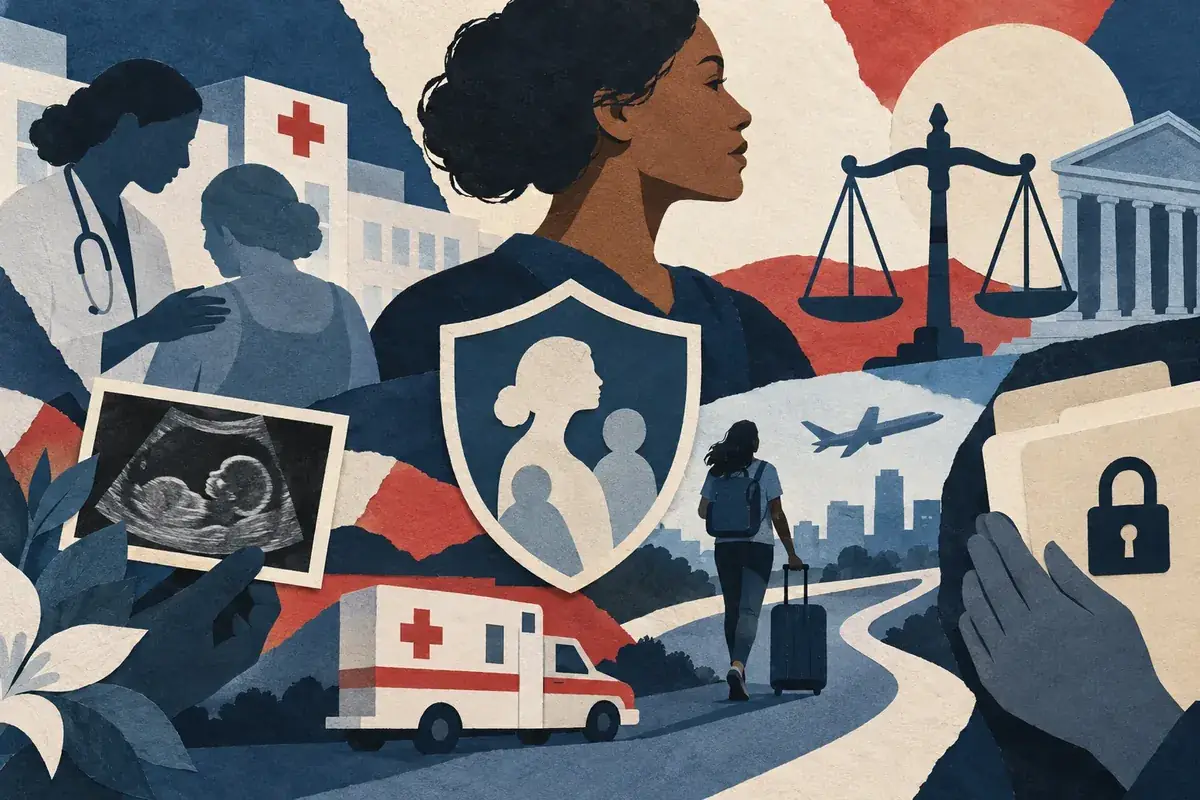
What does Executive Order 14079 do?
Biden’s second post-Dobbs reproductive-health order asked HHS to address continuing barriers and legal uncertainty after EO 14076. Its preamble described concerns about delayed emergency treatment, restricted access to prescription medicines and differing state rules. These were the administration’s reasons for further action; the operative sections assigned HHS particular tasks rather than creating an independent nationwide abortion right. Signed text.
The secretary was instructed to consider legally permissible ways to help people obtain reproductive healthcare, including through Medicaid for patients traveling across state lines. The order did not automatically approve a Medicaid waiver, guarantee reimbursement of all travel costs or override federal abortion-funding restrictions. The phrase “to the extent permitted by Federal law” limited that instruction from the outset. Signed text.
HHS also had to consider technical assistance, provider meetings, guidance and responses to nondiscrimination complaints. Another section required assessment of whether NIH, CDC and other departmental components adequately measured how access affected maternal and other health outcomes, followed by appropriate improvements. The affected groups included patients, federally funded providers and researchers; Justice was discussed in the earlier order’s context but received no new operative assignment here. Signed text.
Before and after
Before the order
EO 14076 had already organized an interagency task force and required a broad access report. HHS had issued emergency-treatment and pharmacy guidance, as this order’s preamble acknowledged. EO 14079 added a more focused Medicaid-access inquiry, nondiscrimination compliance work and scrutiny of health-outcome research. It therefore built on existing activity rather than originating every later reproductive-health agency measure. Signed text.
After the order
The order was signed August 3, 2022. Subsequent disputes over emergency abortion treatment involved EMTALA and agency enforcement rather than an express command in this order requiring every state to fund abortion. On June 27, 2024, the Supreme Court dismissed Moyle review as improvidently granted and vacated the stay; it did not finally resolve the merits. Trump’s EO 14182 revoked EO 14079 on January 24, 2025, and CMS withdrew the earlier pregnancy-related EMTALA guidance effective May 29. Official follow-up record 1. Official follow-up record 2. Official follow-up record 3.
Who had to do what
| Agency / office | Action | Timing / position |
|---|---|---|
| HHS Secretary | Consider lawful reproductive-health access measures, including Medicaid options for interstate patients; consider technical assistance, meetings, guidance and responses to nondiscrimination complaints; evaluate research adequacy and take appropriate improvement action. | No fixed report or rule deadline; the order called for prompt understanding and compliance. |
| National Institutes of Health | Research and analysis activities are subject to the HHS Secretary’s evaluation of their ability to measure access-related maternal and other health outcomes. | No separate NIH deadline or independently mandated new study. |
| Centers for Disease Control and Prevention | Data collection and analysis activities are subject to HHS evaluation and any appropriate improvements directed by the secretary. | No separate CDC deadline or automatic new reporting requirement. |
| Other relevant HHS components | Participate in the department’s assessment and improvements to access-related research and health-outcome measurement. | As directed by HHS after its evaluation. |
What happened next
Biden signed EO 14079. Official source
Moyle dismissed Supreme Court review and vacated the stay without deciding EMTALA preemption on the merits. Official source
EO 14182 revoked EO 14079. Official source
CMS rescinded the earlier July 2022 pregnancy-related EMTALA guidance. Official source
Legal and source detail
How it works legally
The Medicaid instruction was expressly constrained by federal law, including program eligibility and funding limitations; it did not amend the Social Security Act. Section 4 invoked existing federal nondiscrimination protections rather than defining a new protected category by executive order. EMTALA, the Rehabilitation Act and Affordable Care Act protections were cited in the preamble as the basis for earlier HHS actions. Appropriations, statutory authority and administrative procedure still governed later measures, and the order created no privately enforceable benefit. Its revocation must not be confused with repeal of the statutes agencies administer. Signed text.
Sources by type
If a source is unavailable, first check the cited publisher or another official repository. The cited publisher remains the authority.
Primary and official sources
Orders, laws, court records and official implementation material.
How we checked this
Last checked against the sources above on September 9, 2026. How we research →
Federal authority depended on EMTALA, Medicaid, HIPAA and other statutes and could not create a general abortion right. Idaho v. United States and related cases tested EMTALA preemption; those disputes concern statute and agency action, not an independent command in the order.