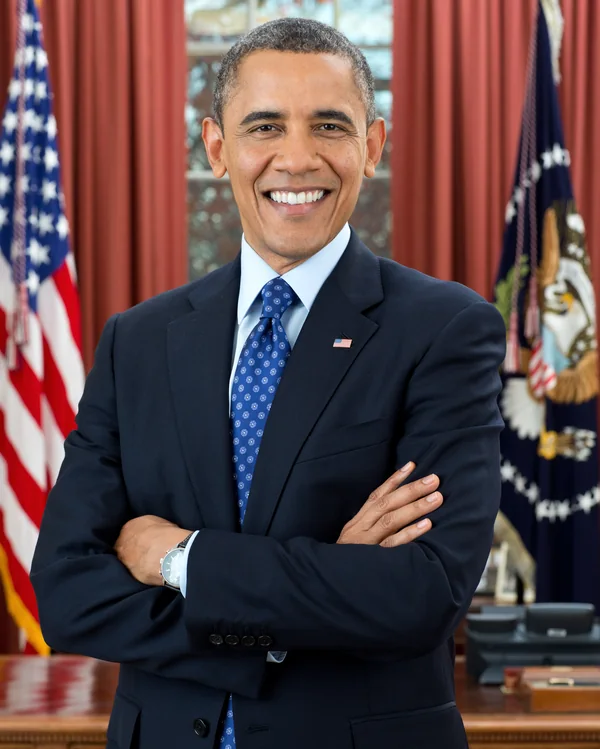
Barack Obama’s orders combined economic-recovery administration, civil-rights and workforce policy, climate and procurement measures, and extensive use of sanctions. Several high-profile orders created temporary bodies to investigate crises or recommend institutional reform.
Obama’s examples range from recovery and spill oversight to sanctions, policing and cybersecurity. Each card identifies the order’s particular role instead of treating the term as one policy response.
Economic-recovery coordination and federal management after the 2007–09 financial crisis.
Climate, energy efficiency, federal procurement and labor standards imposed primarily on federal agencies and contractors.
Sanctions responding to conflicts and democratic breakdown, particularly Libya, Ukraine and cyber-enabled activity.
Commissions and task forces used after the Deepwater Horizon spill and contested police encounters.
Activity across the term
The 2009 and 2017 bars cover only portions of those calendar years. Obama took office on January 20, 2009, and left on January 20, 2017; counts follow each order’s signer.
Executive orders by calendar year
2009–2017
200939
201035
201134
201239
201320
201431
201529
201642
20177
Major events and executive response
The cards distinguish orders that name an event directly, such as the Deepwater Horizon commission, from orders addressing the wider settings of Russia sanctions and cybersecurity.
2007–February 6, 2009Same policy response
Financial crisis and the Great Recession
Weeks after taking office amid a severe recession, EO 13501 established the President’s Economic Recovery Advisory Board. It created an external advisory structure; the larger recovery program also depended on legislation, the Federal Reserve and agency action.
EO 13543 created a national commission to examine the causes of the explosion and oil spill and recommend safeguards. The order and White House announcement explicitly name the disaster.
As Muammar Qadhafi’s government used violence against protesters, EO 13566 declared a national emergency and blocked property of Qadhafi, members of his family and others. Its findings directly identify the violence and risk to Libyan assets.
Russia’s intervention in Ukraine and annexation of Crimea
EOs 13660, 13661 and 13662 progressively expanded sanctions authorities as Russian intervention escalated and Crimea was purportedly annexed. The sequence shows how an order can be broadened as an external crisis develops.
Following police encounters and protests in Ferguson, Staten Island and Cleveland, EO 13684 established the President’s Task Force on 21st Century Policing. The official announcement explicitly placed the task force in that context.
Obama frequently used orders to amend or build on sanctions programs inherited from earlier presidents.
Several contracting and climate orders were revoked or revised by the next administration, illustrating how executive policy can change quickly between presidents.
Some institutional reforms required agency rules, appropriations or cooperation by state and local government; the order was the start of implementation, not the whole policy.
Research boundary
The policing task force made recommendations; EO 13684 did not enact state or local reforms. Sanctions designations and later additions also depended on distinct authorities and records.
Recovery, sanctions, court tests and policy continuity
Several early orders organized advisory or oversight work rather than creating a program by themselves. EO 13501 formed the Economic Recovery Advisory Board shortly after the financial crisis. EO 13543 established a commission to investigate the Deepwater Horizon spill and recommend safeguards. In each case the order created a defined presidential body; it did not replace Congress’s role in economic relief or the agencies’ authority over regulation and enforcement.
Foreign policy orders show the use of successive instruments as circumstances changed. EO 13566 blocked property tied to Libya’s government and related persons after the regime’s violence against civilians. EOs 13660, 13661 and 13662 established and expanded sanctions connected to Russia’s actions in Ukraine. The sequence matters because each order specified a legal basis and expanded the categories of persons or transactions subject to restrictions; it was not a single undifferentiated “Russia sanctions” document. The later Trump administration retained elements of the sanctions framework while using other orders to implement statutory sanctions laws, showing that succession did not simply erase every Obama-era instrument.
On domestic administration, EO 13636 directed a cybersecurity framework for critical infrastructure, and EO 13684 created a task force on policing. The latter followed public concern after fatal police encounters and called for recommendations on training, data, equipment and community trust. The order set up a time-limited advisory process; changes to police practice remained dependent on local authorities, agency programs and laws. That distinction between a presidential commission and binding policy is especially important when the order’s title sounds broader than its operative sections.
Some of the period’s most visible court disputes involved executive action that was not itself an executive order. The challenge in United States v. Texas concerned the Department of Homeland Security’s 2014 DAPA memorandum on deferred action for certain parents, not an EO. The Supreme Court’s equally divided 2016 decision left the lower-court injunction in place without a precedential merits opinion. Separating that memorandum from the EO archive avoids attributing to an executive order a policy document that had a different legal form.
The regulatory-review process was an area of explicit continuity. Obama’s EO 13563 said it reaffirmed the principles of Clinton’s EO 12866 and directed retrospective review of existing rules. By contrast, the signature AI safety order of the later Biden years, EO 14110, was expressly revoked by President Trump’s 2025 EO 14148. Trump’s separate January 2025 AI order then directed a new plan. These examples show why each later order’s revocation clause and implementation record matter more than a broad claim that a successor “kept” or “reversed” an entire predecessor’s agenda.