Executive Order 13986: Ensuring a Lawful and Accurate Enumeration and Apportionment Pursuant to the Decennial Census
President: Joseph R. Biden Jr.
Required apportionment to use the total resident population determined by the census without excluding people based on immigration status.
Status: Revoked.
Is Executive Order 13986 still in effect? No. Executive Order 14148, signed January 20, 2025, expressly revoked EO 13986 in section 2(b). Commerce had already delivered the 2020 apportionment counts on April 26, 2021. Revocation of this presidential instruction did not itself repeal the census statutes or establish that earlier revoked directives automatically returned. EO 14148, section 2(b).
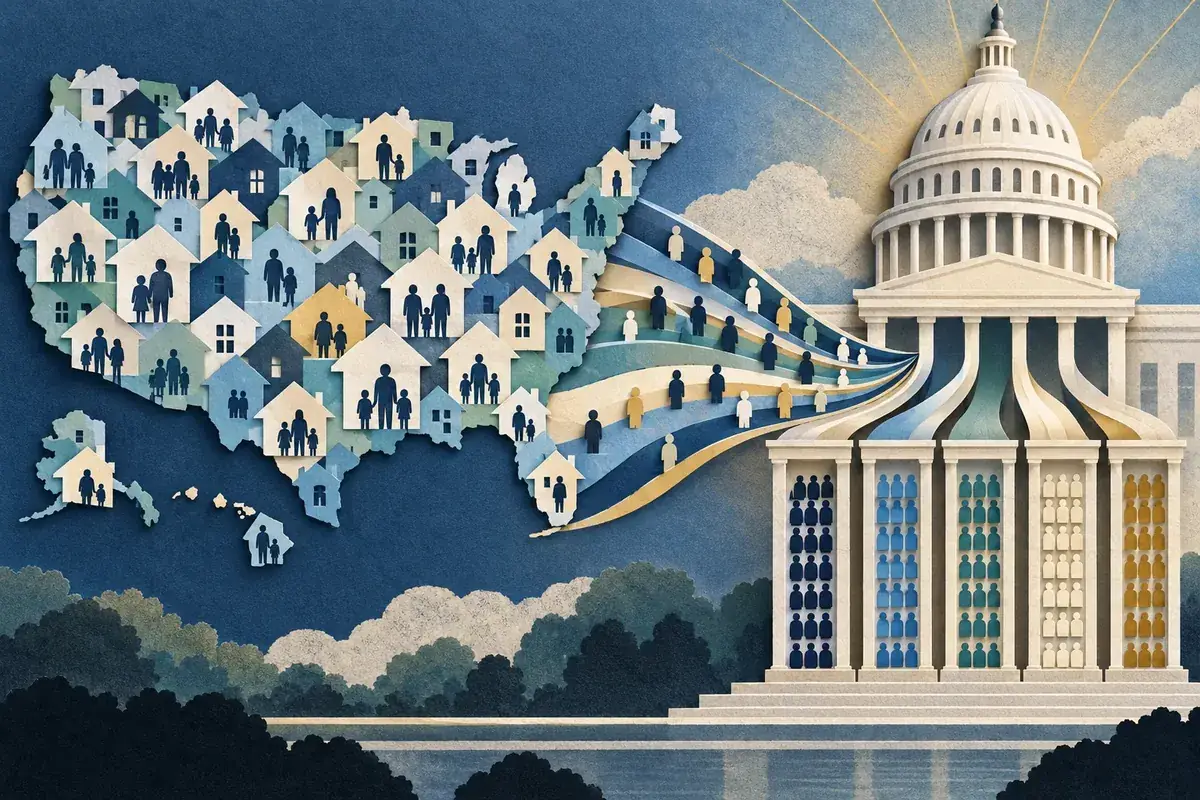
What does Executive Order 13986 do?
The Commerce Secretary was directed to provide the census apportionment tabulation using total persons for the President to transmit to Congress.
Sections 3 and 4 gave the Commerce Secretary three linked responsibilities: report the whole resident population of each state for House apportionment, use whole-population tabulations for state redistricting reports, and ensure that information supplied to the President and states was accurate and lawful. Immigration status was not to exclude a usual resident from those tabulations. These were instructions about the population base and data quality, not a grant of immigration status or an order drawing district boundaries.
Section 5 expressly revoked EO 13880 and the July 21, 2020 presidential memorandum that had sought to exclude people without lawful immigration status from the apportionment base. The order supplied no new numerical delivery deadline. Existing statutory reporting steps and later actual delivery dates are separate questions.
Before and after
Before the order
A 2020 presidential memorandum had sought to exclude some undocumented residents from the apportionment base, generating litigation that did not produce a merits ruling.
After the order
The Census Bureau supplied total-population figures and the President transmitted 2020 apportionment results; EO 14148 later revoked this order after its core task was complete.
For practical use, the official apportionment release and redistricting release are distinct resources. The first concerns the distribution of House seats among states; the latter supplies local-area population counts for drawing districts. Neither publication is an individual immigration-status determination. Apportionment record; Redistricting data release.
Who had to do what
| Agency or official | Direction | Timing |
|---|---|---|
| Commerce Secretary, through the Census Bureau | Report total population by state to the President, counting usual residents without regard to immigration status. | When preparing the report under 13 U.S.C. 141(b); section 3 sets no new numerical deadline. |
| Commerce Secretary | Use whole-resident-population tabulations in reports to state governors and the authorities responsible for legislative apportionment or districting. | When providing reports under 13 U.S.C. 141(c); section 3 sets no new numerical deadline. |
| Commerce Secretary | Take necessary lawful steps to ensure the population information supplied to the President and states is accurate and complies with applicable law. | As information is prepared and supplied; no separate deadline in section 4. |
What happened next
Biden signed EO 13986, including express revocation of EO 13880 and the July 21, 2020 memorandum. Signed order.
The order was published at 86 FR 7015. Federal Register publication.
Commerce delivered the population counts for apportioning House seats to President Biden. This delivery date was an implementation event, not a new deadline written in EO 13986. Census delivery record.
Census released detailed Public Law 94-171 redistricting statistics for states and smaller areas, down to the block level. Census redistricting release.
EO 14148 section 2(b) expressly revoked EO 13986. Signed revocation.
Legal and source detail
The order’s background distinguishes Commerce’s census reporting under 13 U.S.C. 141 from the President’s statutory transmission to Congress under 2 U.S.C. 2a. The latter is not a new agency assignment created by EO 13986. In Trump v. New York on December 18, 2020, the Supreme Court vacated the judgment and remanded for dismissal for lack of jurisdiction, addressing standing and ripeness rather than deciding the exclusion policy’s merits. That decision preceded EO 13986 and did not strike this order down. Supreme Court opinion, pages 3–7.
How it works legally
Article I, the Fourteenth Amendment and 2 U.S.C. §2a govern apportionment. The completed 2020 allocation was not undone by the 2025 revocation.
Sources by type
If a source is unavailable, first check the cited publisher or another official repository. The cited publisher remains the authority.
Primary and official sources
Orders, laws, court records and official implementation material.
How we checked this
Last checked against the sources above on September 24, 2026. How we research →