Executive Order 14247: Modernizing Payments To and From America's Bank Account
President: Donald J. Trump
Directed Treasury and agencies to replace most federal paper checks and receipts with electronic payments, subject to exceptions and accommodations.
Status: In effect. Is Executive Order 14247 still in effect? Yes. Executive Order 14247 remains in effect. See Federal Register record.
What does Executive Order 14247 do?
Treasury had to revise payment methods and exceptions, while agencies enrolled recipients and maintained lawful accommodations.
Reading the operative provisions of Executive Order 14247
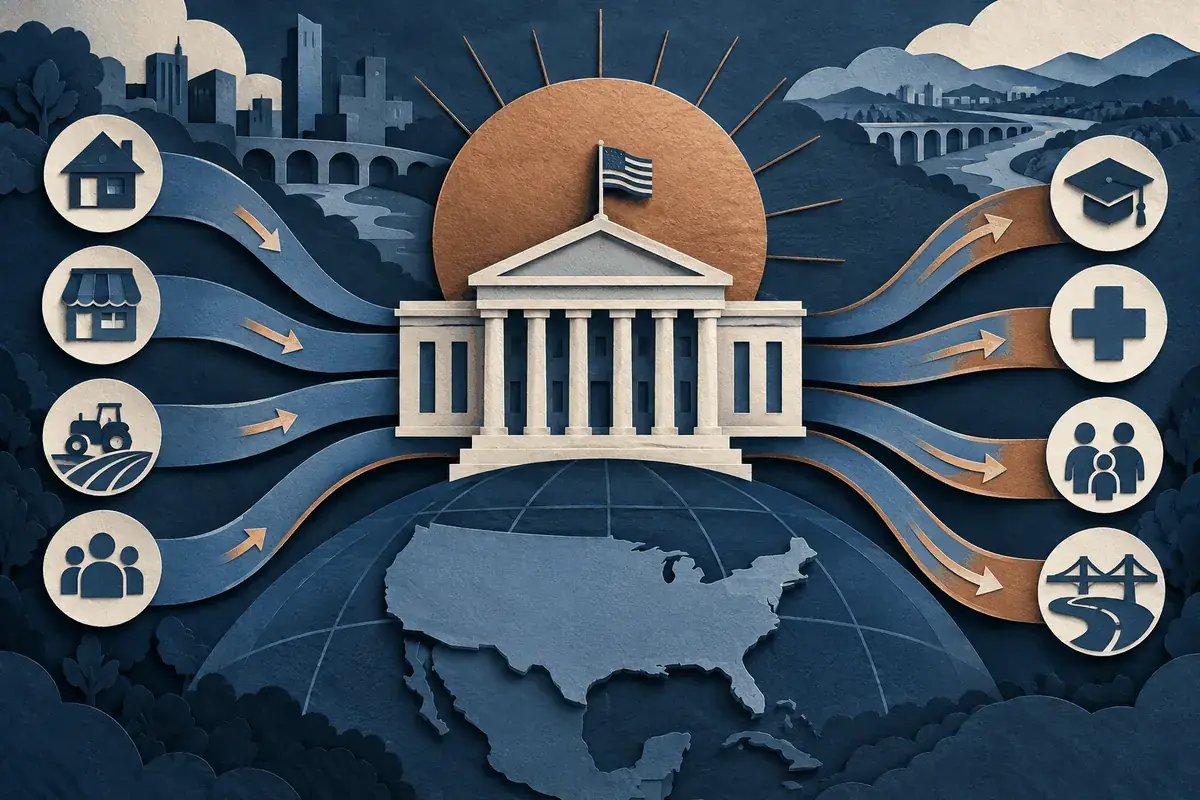
EO 14247 directs Treasury and other agencies to move most federal payments and receipts from paper checks to electronic transactions. The stated aims include faster delivery, lower processing costs and reduced risk of lost or stolen checks. It also recognizes that people may need exceptions or accommodations, so the transition is not simply a command that every recipient immediately open a bank account. The Federal Register publication of EO 14247 defines the transition and assigns Treasury a central role.
The order covers money moving both ways: benefits, refunds and other federal disbursements, as well as payments collected by the government. Electronic delivery may include direct deposit, prepaid instruments or other Treasury-approved methods. Each payment program has different systems and recipient needs, so agencies must coordinate conversion with the underlying program rules. A transition schedule is not proof that every payment has already moved online, and agencies need a process to handle exceptions, failed transfers and people who lack reliable banking access.
Electronic methods can reduce some paper-based risks but introduce others, including incorrect account details, phishing and unauthorized access. Recipients should rely on official agency channels when changing payment information. The order does not authorize agencies to withhold a legally due benefit solely because a recipient has difficulty using a particular digital channel where an exception applies. To assess implementation, examine Treasury’s operating instructions, agency notices, exception procedures and the number of payments successfully converted. The policy’s effect depends on those concrete systems and safeguards.
Before and after
Before the order
Federal law already preferred electronic funds transfer but waivers and paper-check processes remained.
After the order
Most federal disbursements transitioned on September 30, 2025; Treasury retained exception procedures and began phased lockbox changes for incoming payments.
Who had to do what
| Agency / office | Action | Timing / position |
|---|---|---|
| Treasury | End most paper-check disbursements and revise exceptions | September 30, 2025 / ongoing |
| Agencies | Enroll recipients and use electronic collections | Ongoing |
| Treasury | Reduce physical lockbox services | Phased |
What happened next
EO 14247 signed.
Treasury issued a request for information.
Most-paper-check transition took effect.
Legal and source detail
How it works legally
31 U.S.C. §3332 and implementing rules permit exceptions. The order requires accommodations for people without banking access and cannot override program-specific payment law.
Sources by type
If a source is unavailable, first check the cited publisher or another official repository. The cited publisher remains the authority.
Primary and official sources
Orders, laws, court records and official implementation material.
- Treasury implementation hub (opens in a new tab) Official record
- Fiscal Service modernizing payments (opens in a new tab) Official record
How we checked this
Last checked against the sources above on September 9, 2026. How we research →