Executive Order 14260: Protecting American Energy From State Overreach
President: Donald J. Trump
Directed the Attorney General to identify and challenge state and local laws said to burden domestic energy or interstate commerce.
Status: In effect.
Is Executive Order 14260 still in effect? Yes. Active; federal review and litigation strategy directed.
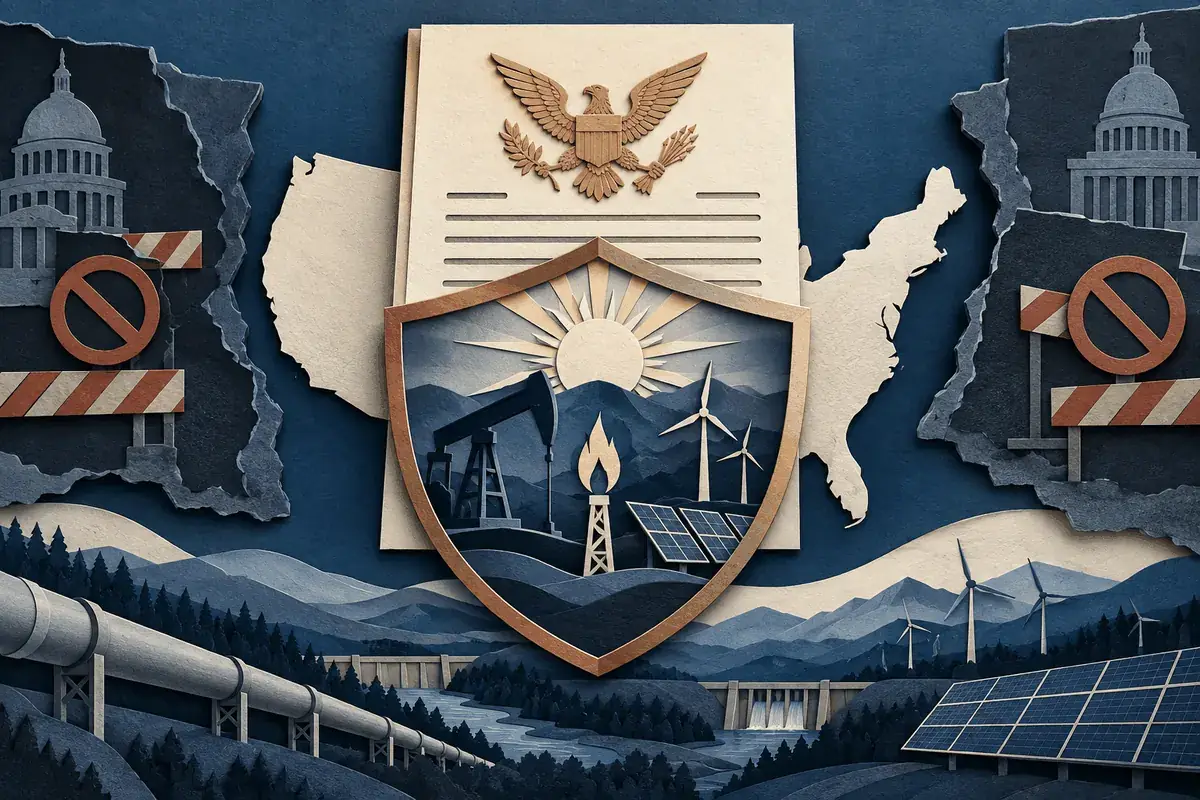
What does Executive Order 14260 do?
Justice had to identify state and local measures and decide whether lawful litigation was warranted in each case.
Later primary evidence reviewed September 24, 2026: Energy requested information on state energy laws as part of the review directed by this order. Official source. The cited steps do not establish every downstream effect.
Reading the operative provisions of Executive Order 14260
EO 14260 directs the Attorney General to identify state and local laws that the administration believes burden domestic energy development or interstate commerce, and to consider legal challenges. The order’s findings and assignments appear in the Federal Register text of EO 14260. Identifying a law for review does not invalidate it. A statute remains in force unless a court enjoins it, a legislature changes it or another valid legal rule displaces it.
Federalism questions are central. States traditionally regulate many areas of land use, utility planning, environmental protection and public health, while Congress can regulate interstate commerce and preempt conflicting state rules through federal law. A presidential order alone does not establish that a state measure is preempted. The Department of Justice would need a legal basis and a case presenting a justiciable dispute; a court would then decide whether the federal claim succeeds under the Constitution and statutes.
The order also raises a practical difference between an investigation and litigation. A review list can set DOJ priorities, but it does not itself change compliance obligations for an energy company or state agency. Any complaint, injunction or final judgment must be assessed on its own terms and geographic reach. To measure the order’s effects, look for DOJ filings, court rulings and any state law changes rather than counting laws identified for review as already overturned.
Before and after
Before the order
States regulated energy, environment, torts and commerce subject to federal pre-emption and constitutional limits.
After the order
DOJ received a litigation and recommendation mandate; the order itself neither repealed a state law nor decided whether any particular measure is pre-empted.
Energy requested information on state energy laws as part of the review directed by this order.
Who had to do what
| Agency / office | Action | Timing / position |
|---|---|---|
| Attorney General | Identify laws and pursue appropriate litigation | 60 days / ongoing |
| Agency heads | Report identified state and local measures | As requested |
What happened next
EO 14260 signed.
Later primary evidence reviewed: Energy requested information on state energy laws as part of the review directed by this order.
Legal and source detail
How it works legally
Pre-emption, dormant Commerce Clause and constitutional questions are decided under governing statutes and judicial precedent. Federal courts, not the order alone, determine validity.
Sources by type
If a source is unavailable, first check the cited publisher or another official repository. The cited publisher remains the authority.
Primary and official sources
Orders, laws, court records and official implementation material.
How we checked this
Last checked against the sources above on September 24, 2026. How we research →