Executive Order 14058: Transforming Federal Customer Experience and Service Delivery To Rebuild Trust in Government
President: Joseph R. Biden Jr.
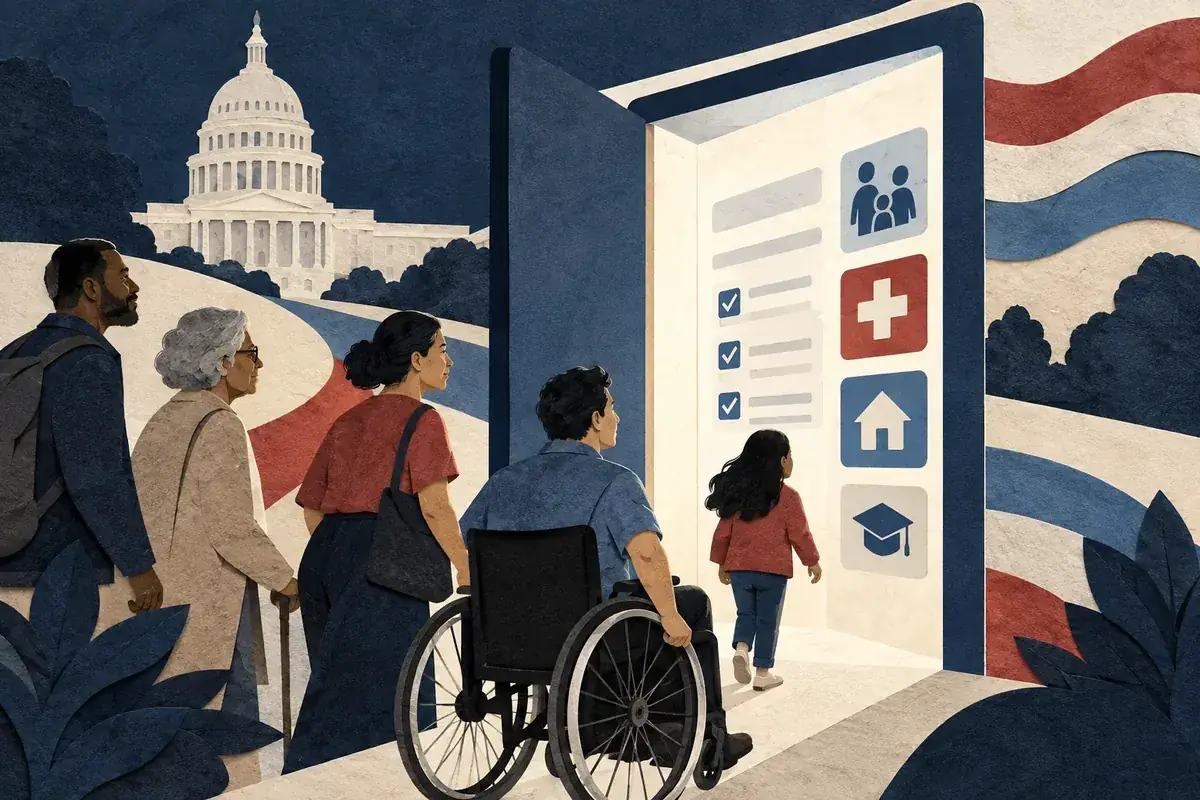
Directed agencies to make high-impact public services simpler, more accessible and more coordinated across life events such as retirement, disaster recovery, health and benefits.
Status: Revoked. Is Executive Order 14058 still in effect? No. Executive Order 14058 was revoked. See Federal Register record.
What does Executive Order 14058 do?
OMB was assigned oversight of high-impact service providers, and agencies were directed to make specified improvements with GSA support.
Before and after
Before the order
Customer-experience work existed under statute and prior OMB policy but services remained fragmented across agency boundaries.
After the order
Agencies designated service providers, measured experience and implemented actions such as simpler benefit access and coordinated digital services. No express revocation was located; individual initiatives remain subject to current agency priorities.
Who had to do what
| Agency / office | Action | Timing / position |
|---|---|---|
| OMB | Designate and oversee high-impact service providers | Ongoing |
| Agencies | Implement specified service improvements | 90–180 days and ongoing |
| GSA | Support shared digital and identity services | Ongoing |
What happened next
EO 14058 signed.
No express revocation located; implementation varies by program.
Legal and source detail
How it works legally
The order directed management under existing law. Privacy, Paperwork Reduction Act, accessibility, benefit statutes, appropriations and administrative-law requirements continued to govern each service.
Sources by type
If a source is unavailable, first check the cited publisher or another official repository. The cited publisher remains the authority.
Primary and official sources
Orders, laws, court records and official implementation material.
- Performance.gov — customer experience (opens in a new tab) Official record
How we checked this
Last checked against the sources above on September 9, 2026. How we research →