Executive Order 14357: Modifying Duties Addressing the Synthetic Opioid Supply Chain in the People's Republic of China
President: Donald J. Trump
Reduced the China fentanyl-related additional duty following a bilateral arrangement.
Status: Partly revoked. Sources: Learning Resources, Inc. v. Trump, Supreme Court opinion, February 20, 2026 · Executive Order 14389, February 20, 2026, sections 1–2 · Executive Order 14357, signed text.
Is Executive Order 14357 still in effect? Partly. The Supreme Court rejected IEEPA tariffs in Learning Resources, Inc. v. Trump on February 20, 2026; EO 14389 ended those duties the same day. Section 3’s monitoring of China’s synthetic-opioid commitments survives; the IEEPA tariff provisions no longer operate.
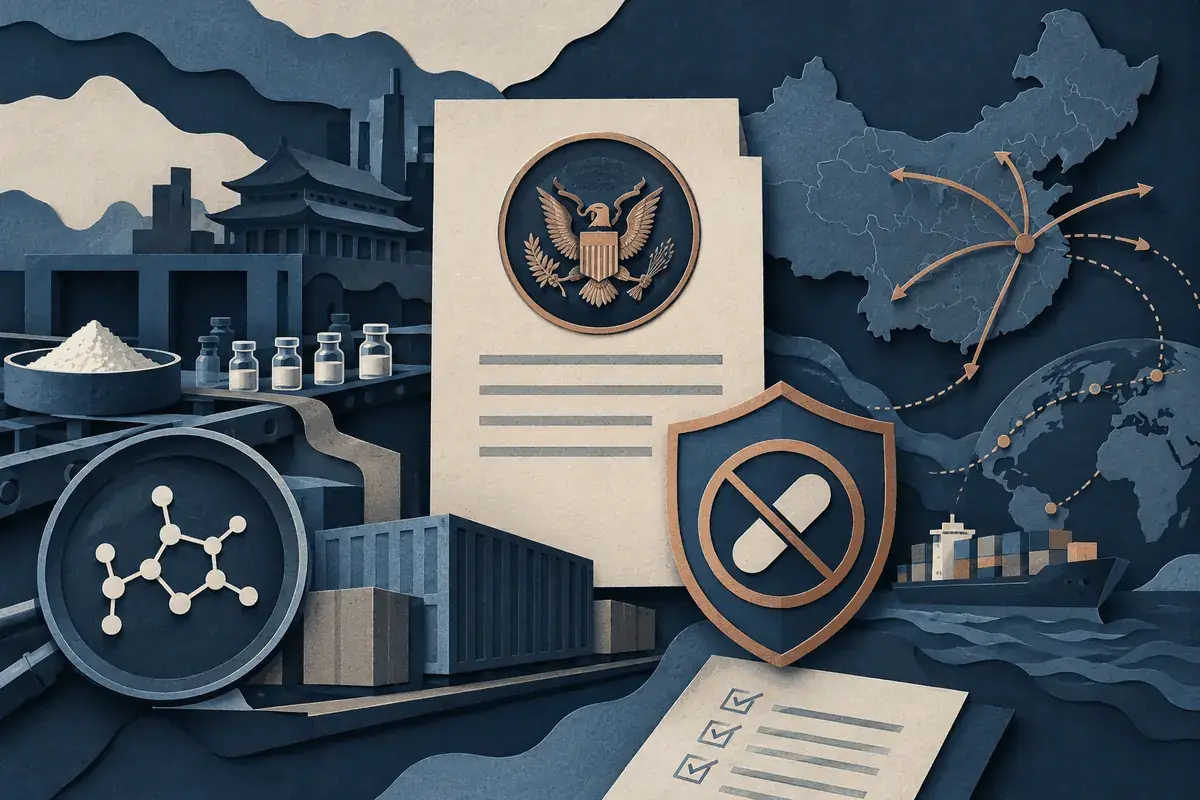
What does Executive Order 14357 do?
This action formed part of the 2025–2026 tariff framework. On February 20, 2026, the Supreme Court held that IEEPA does not authorize presidential tariffs; EO 14389 then ended the additional ad valorem duties imposed under the listed IEEPA orders. Measures based on other statutes and the all-country de minimis suspension require separate analysis.
Reading the operative provisions of Executive Order 14357
EO 14357 reduced the additional China duty associated with the synthetic-opioid supply-chain emergency after a bilateral arrangement. It adjusted a temporary tariff measure; it did not remove every duty on Chinese goods or change the underlying customs classification system. The Federal Register text of EO 14357 sets the rate and effective period.
The action linked trade measures to the administration’s stated efforts to address fentanyl and precursor chemicals. A tariff is a customs measure on imported goods; it is not itself a criminal penalty on a foreign government or an assessment of whether a particular company trafficked drugs. The bilateral arrangement and the order’s tariff terms should be distinguished from law-enforcement cooperation and public-health responses.
The temporary rate later ended or was displaced by subsequent tariff actions, so EO 14357 is recorded as completed or expired. Importers must apply the rate in force on the date of entry and check other duties that may apply. Its historical record shows how the administration used trade policy in the negotiations, but it does not establish current tariff liability or whether the bilateral commitments were fully met.
Before and after
Before the order
The Harmonized Tariff Schedule reflected the then-current reciprocal, country-specific and product-specific treatment.
Earlier orders in the same lineage supplied the baseline that this order amended.
After the order
EO 14389 later ended the China IEEPA fentanyl duty.
EO 14389 ended the listed IEEPA additional ad valorem duties after the Supreme Court decision. It expressly preserved non-IEEPA duties and the separate all-country de minimis suspension.
Who had to do what
| Agency / office | Action | Timing / position |
|---|---|---|
| DHS and USTR | Implement the stated tariff or customs change through the Harmonized Tariff Schedule and entry system | November 10, 2025 |
| Commerce, Homeland Security and USTR | Coordinate implementation and later modifications | As directed |
What happened next
EO 14357 signed.
Supreme Court held that IEEPA does not authorize presidential tariffs; EO 14389 ended the listed IEEPA duties.
A separate temporary section 122 surcharge operated under the Trade Act.
Current position checked against the judgment and later presidential action.
Court status
See the court documents in Sources by type.
Legal and source detail
How it works legally
Learning Resources v. Trump held that IEEPA does not authorize the President to impose tariffs. EO 14389 ended the identified IEEPA duties but preserved the underlying emergencies and non-tariff actions. Section 232, section 301, section 122 and customs-law measures stand or fall on their own authority.
Sources by type
If a source is unavailable, first check the cited publisher or another official repository. The cited publisher remains the authority.
Primary and official sources
Orders, laws, court records and official implementation material.
How we checked this
Last checked against the sources above on September 9, 2026. How we research →