Executive Order 14024: Blocking Property With Respect to Specified Harmful Foreign Activities of the Government of the Russian Federation
President: Joseph R. Biden Jr.
Declared a national emergency and authorized blocking and other sanctions for specified harmful Russian government activity, including cyber operations, election interference, corruption and territorial aggression.
Status: In effect as amended.
Is Executive Order 14024 still in effect? Yes. Executive Order 14024 remains in effect as amended by Executive Order 14114 of December 22, 2023. The March 24, 2026 notice continued its national emergency beyond April 15, 2026, and OFAC continued issuing implementing licenses in October 2026.
What does Executive Order 14024 do?
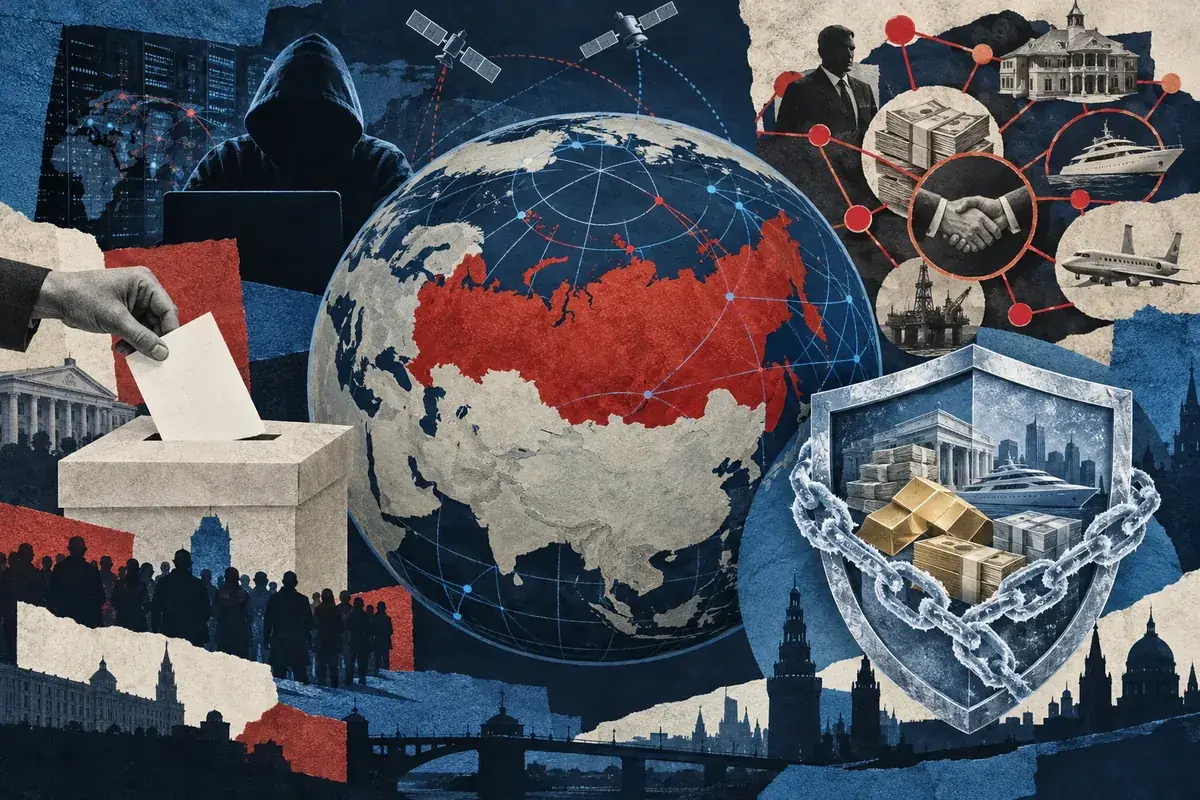
Biden declared a national emergency concerning specified harmful activities of the Russian government: election interference, malicious cyber operations, transnational corruption, attacks on dissidents and threats to other countries’ territorial integrity. The order created a sanctions framework under which identified people’s property could be frozen when it was in the United States or under a US person’s possession or control. It did not automatically block every Russian citizen or every Russian business. Signed text.
Treasury and State received criteria for identifying covered persons. These included operating in specified sectors, acting for the Russian government in the listed harmful activities, supporting sanctioned persons and being owned or controlled by covered persons. Other provisions addressed Russian assistance to blocked governments and disruption of energy supplies to Europe, the Caucasus or Asia. The order separately suspended entry for noncitizens meeting its designation criteria, subject to exceptions administered by State and Homeland Security. Signed text.
Blocking generally prevents property being transferred, paid or otherwise dealt in; it is not an automatic transfer of ownership to the government. The rules also prohibit providing or receiving funds, goods or services involving blocked persons and evading the restrictions. Treasury may issue regulations, directives and licenses, so the actual compliance obligation depends on the applicable designation and authorization, not merely a company’s Russian connection. Signed text.
Before and after
Before the order
Earlier Russia-related sanctions operated under other emergencies, including the Ukraine and malicious-cyber-activity frameworks. EO 14024 supplied an additional emergency and a broader set of designation criteria for harmful Russian state activity. A business therefore had to examine which legal authority and restriction applied instead of treating all Russia sanctions as one identical prohibition. Signed text.
After the order
OFAC implemented the framework in 31 CFR part 587, beginning with regulations effective March 1, 2022. EO 14114 later added powers targeting foreign financial institutions supporting Russia’s military-industrial base. Continued licenses show that the program has not simply disappeared with the change of administration: on October 8, 2026, OFAC issued General License 13S for specified administrative transactions otherwise prohibited by Directive 4. Official follow-up record 1. Official follow-up record 2. Official follow-up record 3. Official follow-up record 4.
Who had to do what
| Agency / office | Action | Timing / position |
|---|---|---|
| Secretary of the Treasury / OFAC | Determine covered persons and sectors with State consultation; administer blocking, directives, licenses and implementing regulations; submit authorized emergency reports to Congress. | From issuance; recurring reports as required by the emergency statutes. |
| Secretary of State | Consult on Treasury determinations; make authorized harmful-activity and energy-disruption determinations; implement visa restrictions and entry exceptions. | As determinations arise; no fixed designation deadline. |
| Attorney General | Consult on the specified harmful-activity determinations and recommend entry exceptions supporting important US law-enforcement objectives. | When relevant determinations or exceptions are considered. |
| Secretary of Homeland Security | Implement restrictions on entry and consult with State on the relevant procedures and exceptions. | For covered noncitizens’ admission decisions. |
| All federal departments and agencies | Take appropriate implementing measures within their existing authority. | Ongoing while the order applies. |
What happened next
EO 14024 declared the national emergency. Official source
OFAC’s implementing regulations at 31 CFR part 587 became effective. Official source
EO 14114 amended the order to authorize sanctions against specified foreign financial institutions. Official source
The president continued the national emergency beyond April 15, 2026. Official source
OFAC issued General License 13S under the active program. Official source
Legal and source detail
How it works legally
The order invokes IEEPA, the National Emergencies Act, Immigration and Nationality Act section 212(f) and presidential delegation authority. Statutory exceptions and OFAC licenses limit otherwise prohibited transactions; official federal and UN business receives an express exception. Emergency continuation and later amendments matter independently of a particular listing. The order authorizes sanctions administration but does not itself create a private damages action. Signed text.
Sources by type
If a source is unavailable, first check the cited publisher or another official repository. The cited publisher remains the authority.
Primary and official sources
Orders, laws, court records and official implementation material.
How we checked this
Last checked against the sources above on September 9, 2026. How we research →